

This post contains affiliate links.
On The Table Read Magazine, “the best arts and entertainment magazine UK“, master your GCSE art coursework with this practical guide on transforming scattered sketches into a cohesive, top-tier portfolio through personal themes, material testing, and strategic planning.
GCSE Art portfolios thrive when students transform scattered sketches and half-finished experiments into a clear journey toward a finished artwork. Success relies on authentic art development, honest testing, and purposeful choices rather than starting with flawless pages.
This comprehensive guide helps students build personal, well-planned coursework using portraits, natural forms, urban textures, found objects, collage, printmaking, sculpture, and visual storytelling. Students can work across pencil, paint, ink, photography, fabric, recycled materials, clay, or digital edits by selecting methods that match their chosen theme and message.
Practical strategies include turning artist research into original experiments instead of copies, using thumbnail sketches to fix composition problems, taking original source photographs, and applying written feedback. While these methods do not guarantee top grades, they establish a clear framework to show thought, progress, and personal choices.
/66a5cf2cdca401ffe1c04b25e888a699/invoke.js”>“>20 GCSE Art Portfolio Ideas That Show Real Creativity and Development (Your Best Final Piece Starts Here!)

1. Begin With a Personal Theme Mind Map

A strong GCSE art portfolio begins with an idea that belongs to you. Choose something you notice often, such as family objects, changing seasons, local buildings, music, identity, or crowded streets. A personal theme gives your work direction while leaving room for drawings, photographs, paintings, and material experiments. It also helps your final piece feel connected instead of randomly assembled. Editor’s Choice
Use a large sketchbook page and place your main idea in the centre. Add branches for colours, textures, artists, places, emotions, objects, and possible techniques. Do not worry about neat handwriting or perfect drawings at this stage. Add quick symbols, tiny sketches, arrows, and crossed-out thoughts to show how your ideas grow.
Build your first mind map with these practical steps:
– Collect five objects that connect clearly with your chosen theme.
– Photograph shadows, cracks, folds, reflections, and unusual surface details.
– Create three colour strips based on mood rather than realism.
– Choose one exciting branch for your first focused study.
Keep the subject broad enough to develop, then narrow it through testing. Nature might become seed pods, decay, tangled roots, or leaf patterns. Identity could lead to clothing, handwriting, family objects, or familiar places. Those decisions show development because they explain why your project moves in one direction.
A rough first page can become valuable evidence of curiosity. Return to it later and mark which ideas became useful. Your portfolio will show a clear journey from an early thought to a considered final piece.Begin With a Personal Theme Mind Map

Talens Art Creation Sketchbook – 15×15 cm – 110g – 80 Sheets – Spiral Bo…
 AmazonUSD 10.51

Fineliner Pens, 12 Pack Black Technical Drawing Pens, Fine Line Markers
AmazonUSD 11.35
2. Build Confidence Through Observational Drawing

Observational drawing gives you clear proof of progress because the subject stays still while your skills develop. Choose objects that connect to your theme, such as a worn shoe, cracked mug, houseplant, shell, family photograph, or folded jacket. Ordinary objects can reveal shape, texture, shadow, and personal meaning when you study them closely. You do not need a dramatic subject to make strong work. Editor’s Choice
Begin with a one-minute sketch to capture the main outline and spaces around the object. Follow it with a ten-minute drawing using a different tool, then make a slower study focused on tone and texture. Keep the versions together so your teacher can see how your choices improve. Mistakes are useful when they show what you learned next.
Build a simple observational drawing sequence:
– Block proportions lightly before adding darker lines and details.
– Repeat the subject in charcoal to explore broad, soft shadows.
– Test ink marks that appear confident, broken, nervous, or loose.
– Crop closely to study one texture instead of everything.
Change the lighting, background, and viewpoint between studies. Side light can reveal dents and folds, while soft light shows gentle colour changes. Place the object on fabric, cardboard, or a reflective surface to create fresh compositions. Photograph your setup so the source of each drawing remains clear.
Not every drawing needs to look finished. A page containing quick attempts, corrections, and notes often shows more growth than a perfect isolated image. Place an early sketch beside a later study and explain one visible improvement, such as stronger proportion, richer tone, or more convincing texture.Build Confidence Through Observational Drawing

SOL 24pk Blending Stumps and Tortillions – Paper Art Tools
AmazonUSD 5.47
40 Pcs Blending Stumps and Tortillions Set, Art Blending Tools Supplies
AmazonUSD 6.52
A4 Sketch Book, 160gsm Mixed Media Sketchbook, Spiral Art Drawing Book
AmazonUSD 10.68
3. Turn Artist Research Into Your Own Experiments

Artist research becomes valuable when it changes the way you make your own work. Instead of filling pages with biography, study how an artist uses colour, cropping, scale, symbols, texture, or materials. Then test one of those choices with a subject from your project. This approach shows influence while keeping your portfolio personal and original. Editor’s Choice
Choose two or three artists with different strengths. One may help you understand bold colour, another may suggest layered surfaces, and a third may improve your compositions. Copy a small detail to understand the technique, then change the subject, viewpoint, colour, or medium. Your experiment should answer a question rather than simply reproduce an artwork.
Turn research into active making:
– Copy one small area to study the artist’s marks closely.
– Apply those marks to your own theme and source material.
– Mix a new palette using colours from your photographs.
– Test the method with ink, fabric, collage, or thread.
Keep the difference between influence and imitation clear. Strong black outlines could become broken pencil marks or stitched thread. Large flat colour areas could become torn paper or transparent washes. These changes show that you selected useful ideas and adapted them to suit your own message.
Place the original study, your experiment, and a short response together. Explain what worked, what felt unsuitable, and what you would alter next. An unsuccessful test can be valuable evidence when it leads to a better decision. Your final piece will feel more thoughtful because every influence has passed through your own creative process.Turn Artist Research Into Your Own Experiments

Daler-Rowney Simply Mixed Media Paper Pad A4 160gsm 30 Sheets
AmazonUSD 7.55
A4 Tracing Paper 63 GSM, 50 Sheets for Drawing & Sewing Patterns
AmazonUSD 9.32
4. Use Your Own Photography as a Strong Source

Your own photographs can make a GCSE art portfolio feel immediate and personal. They give you original sources instead of relying on the same online images as other students. Photograph places around your home, school, or neighbourhood, then look for reflections, shadows, repeated shapes, worn surfaces, and unusual overlaps. Small details can become powerful starting points for drawings, paintings, and collages. Editor’s Choice
Take many photographs, then select carefully. A page of six varied images often looks stronger than twenty similar shots. Include wide views to explain the setting and close crops to reveal texture. Change your height, distance, and angle so you can compare a low stairwell view with a tight crop of a railing or wall.
Make your photography support further development:
– Photograph one subject in morning, afternoon, and evening light.
– Test portrait and landscape formats before choosing a crop.
– Pair a familiar object with an unfamiliar surface for contrast.
– Turn selected photographs into drawings, colour studies, and collages.
Use each photograph as evidence for a visual decision. A shadow could inspire charcoal, a reflection might lead to a distorted portrait, and brick textures could become a printed background. Keep shared colours and shapes visible between the photograph and later experiments so your development is easy to follow.
Technical perfection is not required. Blur, strong contrast, or strange cropping can create useful ideas when you understand why you kept the image. Build a contact-sheet-style page, then respond to one source in three different ways. This creates range while keeping your portfolio focused around original research.Use Your Own Photography as a Strong Source
A4 Sketch Book, 160gsm Mixed Media Sketchbook, Spiral Art Drawing Book
AmazonUSD 10.68
Canon imagePROGRAF PRO-310 A3+ Professional Photo Printer, Archival
AmazonUSD 794.01
5. Fill a Page With Material and Texture Tests

A material test page quickly shows that you explored before choosing your final technique. Gather a small group of media linked to your theme, such as acrylic, watercolour, charcoal, ink, thread, tissue paper, foil, fabric, cardboard, or natural objects. Testing first helps you discover which surfaces feel rough, soft, shiny, faded, fragile, or heavy. It also prevents a large final piece from becoming an expensive experiment. Editor’s Choice
Give every sample a clear purpose. You might be trying to recreate tree bark, worn metal, skin, deep shadow, cracked paint, or a remembered place. Press, scrape, wipe, dilute, stamp, tear, and drag each medium. An old card, sponge, stick, or fabric edge can create more interesting marks than a standard brush.
Explore texture through practical tests:
– Drag dry acrylic across rough paper for broken dusty marks.
– Sprinkle salt into wet watercolour and record the dried pattern.
– Press fabric into paint to create repeated surface marks.
– Scratch through dark pastel to reveal a brighter layer underneath.
Keep a few failures beside your strongest results. Muddy colour, cracked surfaces, or lost detail can show how you changed the method. You might use less water, switch paper, add a sealing layer, or choose a wider tool. That response demonstrates practical development instead of simple collecting.
Finish the page by combining three successful materials in one small composition. Photograph wet experiments before they dry if the surface changes, and attach samples securely. Moving from separate tests to a planned combination will help you make a confident choice for the final piece.Fill a Page With Material and Texture Tests

10-Pack 23x30cm Canvas Set 280gsm Cotton for Acrylic Oil Gouache
AmazonUSD 22.39
GCSE Fine Art Practice Sketchbook: A GCSE ART Portfolio practice Book
AmazonUSD 15.57
Colcolo Beginner Collage Material Arts and Crafts Kit Brush Set Glue Dis…
AmazonUSD 12.15
6. Let a Limited Colour Palette Control the Mood

A limited colour palette can make your GCSE art project feel calm, focused, and intentional. Choose three to five main colours, then test how they affect the mood of your theme. Muted blue, grey, and rust may suggest distance or age, while orange, pink, and deep violet can create energy and tension. The best palette is not simply attractive. It supports the idea behind your work. Editor’s Choice
Make small colour studies before starting a large painting. Mix several versions of each colour by adding white, black, a complement, or a nearby hue. Place the samples beside your photographs and drawings to see which combinations feel strongest. Record useful mixes, but pay attention to the overall mood rather than creating a perfect colour chart.
Develop your palette through focused comparisons:
– Paint one study with realistic colours and another with exaggeration.
– Test warm and cool versions of the same subject.
– Add one bright accent against a mostly quiet background.
– Compare flat blocks, loose washes, and thick textured applications.
A small palette can still offer plenty of variety. Change transparency, pressure, thickness, and texture so one blue becomes pale, smoky, greenish, or nearly black. You are also free to move away from the reference photograph. Memory may need faded colours, while energy may need sharp contrast and unexpected combinations.
Choose the final palette after comparing several studies. Place the selected version beside an early attempt and a refined one. Showing how your colour choices improve the mood, focus, or meaning will make the final piece feel considered rather than copied.Let a Limited Colour Palette Control the Mood
A4 Sketch Book, 160gsm Mixed Media Sketchbook, Spiral Art Drawing Book
AmazonUSD 10.68
MEEDEN 8-Well Ceramic Artist Paint Palette, Rectangle Porcelain Watercol…
AmazonUSD 18.65
Exerz Acrylic Paint Set With Brushes Wooden Palette For Artists Students
AmazonUSD 12.02
7. Create Depth With Mixed-Media Collage

Mixed-media collage can add depth, texture, and personal meaning to a GCSE art portfolio. Combine photographs, painted paper, fabric, pencil, ink, thread, packaging, tracing film, and found surfaces. This works well for themes about memory, identity, places, change, nature, and collected objects because each material can suggest a different part of the story. Editor’s Choice
Begin by making your own papers instead of buying a large pack of decorative scraps. Paint plain sheets with your chosen palette, rub graphite across rough surfaces, print simple textures, or stain tissue with diluted ink. Tear some pieces and cut others so the edges create contrast. Test how photographs and drawings look when covered, repeated, folded, or partly hidden.
Develop your collage with purposeful layers:
– Place tracing paper over a drawing to create distance or uncertainty.
– Tear photographs so the subject becomes fragmented and less predictable.
– Paint across printed images to connect separate visual sources.
– Stitch or pierce paper where a line needs physical emphasis.
Do not add material only because it looks attractive. Each layer should support the theme, composition, or mood. If the surface becomes crowded, remove pieces or cover them with a thin wash. Photograph the work before and after editing so your teacher can see how removal improved the focal point.
Test glue, paper strength, and display methods before making the final version. Thick collage can peel, cast shadows, or become difficult to transport. Create three small versions, such as crowded, simplified, and partly covered. Selecting the clearest arrangement will turn a collection of scraps into a confident composition.Create Depth With Mixed-Media Collage

EXERZ Craft Scissors 8pcs, Edge Scissors with a Carrying Bag, 8 Patterns…
AmazonUSD 13.35
A4 Sketch Book, 160gsm Mixed Media Sketchbook, Spiral Art Drawing Book
AmazonUSD 10.68
Acrylic Paint Set, 24 Rich Pigment Colors with 10 Art Brushes for Painti…
AmazonUSD 13.35
8. Use Thumbnails to Solve Composition Problems Early

Thumbnail drawings help you solve composition problems before they become difficult and expensive to fix. Each small sketch can test layout, balance, scale, empty space, and the main focal point. Since thumbnails take only a few minutes, you can try bold changes without worrying about ruining a large sheet. Simple blocks often reveal more than detailed drawings at this stage. Editor’s Choice
Make at least six versions with different crops and viewpoints. Move the subject towards an edge, enlarge one area, remove background detail, turn the layout sideways, or create a strong diagonal. Use a soft pencil, charcoal, or marker so the light and dark areas remain easy to read from a distance.
Check each composition with focused questions:
– Identify the area that should attract attention first.
– Test whether the eye travels naturally across the image.
– Leave empty spaces that help the main shapes breathe.
– Place the darkest tone where it strengthens the focal point.
Compare your best thumbnails with colour and material tests. A layout may work in pencil but become confusing when painted, or a crop may lose energy when enlarged. Test the selected design in two different media before committing to the final support.
Keep rejected versions when they show useful decisions. A crossed-out idea can prove that you compared options instead of copying one photograph. Finish with a small plan that moves from loose blocks to a chosen viewpoint, colour arrangement, and material direction. This simple sequence gives your portfolio clear control and purpose.Use Thumbnails to Solve Composition Problems Early


Tongfushop 100 Colored Marker Set, Dual Tip Art Alcohol Markers for Drawing
AmazonCheck Price
Lanjue 12 Pcs Nail Art Pen Set, 0.5 mm, Graffiti Drawing Pens for DIY Nails
AmazonUSD 6.67
9. Transform a Real Subject Into Something Surreal

Surreal art becomes stronger when an impossible idea grows from careful observation. Begin with a real object, person, place, or photograph that you understand through drawing. Then stretch it, repeat it, combine it with another form, change its scale, or place it somewhere unexpected. The transformation should connect to your theme rather than appearing as random decoration. Editor’s Choice
A key growing roots could suggest memory, a house containing weather could represent inner feelings, or a portrait merging with a map could show belonging. Make several versions so you can compare what each change communicates. A strange visual choice becomes meaningful when the viewer can sense a reason behind it.
Develop surreal ideas through these experiments:
– Overlap two observational drawings and trace their shared outlines.
– Repeat one object at different sizes to suggest time or pressure.
– Replace a natural texture with a man-made surface for contrast.
– Change the scale so a personal object dominates its setting.
Keep the original source visible through photographs, direct studies, and proportion sketches. This proves that your unusual image grew from research instead of a quick digital effect. If you edit digitally, print the stages or recreate key changes by hand so your material decisions remain clear.
Use one strong transformation rather than filling the image with unrelated symbols. Pay close attention to edges, shadows, and scale so the impossible idea still feels believable. Show a three-step sequence from accurate study to first transformation to refined composition. That progression can turn an unusual concept into a convincing final piece.Transform a Real Subject Into Something Surreal

A4 Tracing Paper 63 GSM, 50 Sheets for Drawing & Sewing Patterns | Trans…
AmazonUSD 9.32
GCSE Fine Art Practice Sketchbook: A GCSE ART Portfolio practice Book
AmazonUSD 15.57
10. Develop a Portrait Around Identity and Expression

A meaningful portrait explores identity, mood, and personal history rather than facial accuracy alone. Clothing, posture, objects, lighting, colour, and background can tell the viewer more about a person. Your subject might be yourself, a family member, a friend, or a fictional figure built from several references. Traditional beauty is not essential. Character and honest observation matter more. Editor’s Choice
Begin with small studies of faces, hands, clothing, and body positions. Test different expressions, angles, crops, and lighting conditions. A three-quarter view may reveal more structure than a straight-on pose, while a cropped hand or shoulder can suggest a story. Return to the whole figure after studying individual features so the final image remains connected.
Add personal meaning with carefully chosen details:
– Include an object that belongs to the person or holds memory.
– Repeat clothing patterns or colours as visual symbols.
– Replace a literal background with layered personal textures.
– Test calm, tense, blurred, and partly hidden expressions.
Ask permission before photographing someone, and take your own references whenever possible. If you combine several images, record what you changed so the final portrait remains your construction. When a likeness feels wrong, check proportion, head shape, negative space, and value before adding detail.
Show an early attempt beside a corrected study and identify the visible improvement. Finish with a portrait that joins your strongest facial drawing, a meaningful object, and a tested background. This combination of observation and personal meaning can give your final piece real depth.Develop a Portrait Around Identity and Expression

Hawksbill A3 Black Sketchbook 40Sheet/80 Page Hardcover Sketch Book 150GSM
AmazonUSD 12.58
FEBSNOW 12 Pcs Blending Stump and Tortillions, Paper Art Blenders, Art P…
AmazonUSD 5.03
11. Study Natural Forms From Close Up

Natural forms provide endless ideas for shape, pattern, texture, and change. Leaves, seed pods, shells, feathers, stones, flowers, insects, and tangled roots can all become useful sources. Strong work does not stop at copying a pretty object. It studies how the form grows, folds, breaks, repeats, dries, or changes under different light, then turns those observations into a personal composition. Editor’s Choice
Collect fallen or naturally discarded objects rather than disturbing living plants or animals. Photograph each form from above, side-on, and extremely close. Look for veins, cracks, fibres, scales, dusty surfaces, and tiny patterns that disappear in a wider view. Direct observation will give your later abstract work a convincing foundation.
Build a natural-form study sequence:
– Draw the structure lightly with pencil before adding careful detail.
– Use charcoal to explore the object’s deepest shadows.
– Follow branching lines with ink and turn them into a pattern.
– Enlarge one small detail until it becomes almost abstract.
Scale can change the entire meaning of a natural object. A tiny seed may fill a page, while a whole flower may become a simple silhouette. Connect the forms to themes such as growth, ageing, protection, fragility, or change so the project becomes more than botanical decoration.
Keep the original studies beside altered versions. Include direct drawings, photographs, material samples, and failed prints to show your decisions. Push one natural form through accurate observation, repeated design, and resolved mixed media. The final image may be recognisable or abstract, as long as the visual connection remains clear.Study Natural Forms From Close Up


STAEDTLER 8101-0 FIMO Air Basic – Air-Drying Modelling Clay, 1 kg – White
AmazonUSD 5.35
Artway Studio A3 Mixed Media Pad (Multi Art Pad) – Ideal for Multimedi…
AmazonUSD 12.22
12. Turn Urban Textures Into a Visual Story

Urban spaces offer rich sources for colour, pattern, atmosphere, and texture. Peeling posters, rusted railings, cracked pavements, windows, graffiti shapes, wires, signs, brickwork, and reflections can all become art material. You do not need a dramatic skyline. A small section of a wall may provide more useful detail than a perfect city view, especially when it belongs to a place you know. Editor’s Choice
Visit a safe local area more than once and record changes in light, weather, and activity. Take photographs at different distances, then make quick drawings if possible. Collect colours from the actual location, such as faded blue paint, orange rust, dusty concrete, and green moss. These choices will feel more personal than a standard grey city palette.
Develop urban sources with practical experiments:
– Make graphite rubbings from safe, flat textured surfaces.
– Crop photographs until buildings become almost abstract shapes.
– Layer maps, shadows, structures, and non-readable marks.
– Compare busy and empty views to test different atmospheres.
Be careful with photographs of people, homes, and private property. Focus on surfaces and structures when permission is uncertain. Choose details that support your theme, such as belonging, movement, loneliness, history, noise, or change. Use thumbnails to prevent the final piece becoming overcrowded.
Test a black-and-white study before adding colour so you can check the structure. Show the journey from location photograph to rubbing, simplified composition, and final artwork. This sequence proves that your ideas developed through direct research rather than a random online city image.Turn Urban Textures Into a Visual Story

Sketching Pencils Set of 27 Pcs – Drawing Pencils for Artists and Profes…
AmazonUSD 12.02
ESSDEE L5PKR1 Essdee Lino Cutting & Printing Kit (23 Pieces)
AmazonUSD 39.15
STATIONERY ISLAND A4 Sketchbook, Hardcover Sketch Book with 200GSM Thick…
AmazonUSD 12.48
13. Build a Theme Around Found Objects

Found objects can give your portfolio a strong sense of history because each one carries marks of use. Old keys, receipts, buttons, toys, tools, containers, packaging, shells, and fabric scraps may suggest people, places, memories, or change. You do not need rare items. Ordinary objects become interesting when you find visual or personal connections between them. Editor’s Choice
Gather objects from your home or another safe source, then arrange them together. Look for shared colours, shapes, materials, scratches, labels, dents, stitching, and worn edges. Photograph the collection from above before isolating individual objects for detailed studies. These small details can support a final image that later becomes abstract or symbolic.
Develop your collection in several directions:
– Arrange objects by colour, size, material, age, or personal importance.
– Draw one object accurately, then simplify it into a repeated symbol.
– Make rubbings, prints, casts, or paper impressions of selected surfaces.
– Rearrange the group and photograph each composition for comparison.
Think about safety before using any item. Avoid sharp, dirty, electrical, or private objects without adult guidance. Clean materials carefully and never alter something meaningful to another person without permission. When an object cannot be changed, use photographs and drawings instead.
Push beyond simple still life by asking what the objects suggest. Old keys might represent access, while worn toys could explore childhood and change. Complete three arrangements, one detailed drawing, and one surface test before combining the strongest evidence. This creates a natural path from collecting to selecting and refining.Build a Theme Around Found Objects
Sketching Pencils Set of 27 Pcs – Drawing Pencils for Artists and Profes…
AmazonUSD 12.02
GCSE Fine Art Practice Sketchbook: A GCSE ART Portfolio practice Book
AmazonUSD 15.57
Castle Art Supplies Mixed Media Set – 120 Plus Art Pencils for Adults
AmazonUSD 80.19
14. Use Layering and Transparency to Show Change

Layering can show time, memory, growth, and different viewpoints in one artwork. Use tracing paper, acetate, tissue, fabric, thin paint washes, vellum, mesh, or overlapping collage. Each layer can hold a separate part of your research, such as a photograph, drawing, repeated shape, colour field, or texture. When the layers move or overlap, the meaning can shift. Editor’s Choice
Make separate studies before attempting the final layered piece. Draw the same subject from different angles, then create one layer for line, another for colour, and another for texture. Test how much of each layer should remain visible. Too many strong images can become muddy, while a partly hidden mark can create a useful sense of discovery.
Test transparency with controlled changes:
– Place tracing paper over a drawing and repeat only key lines.
– Stain a background with diluted paint without hiding every detail.
– Cut windows into paper so earlier images appear through openings.
– Stack drawings or photographs to create movement and overlap.
Transparency can also rescue a weak drawing. Cover only the part that needs changing and allow the remaining marks to create depth. Photograph the work after each layer so your development remains clear. Test glue, paint, and plastic on scraps first because some surfaces wrinkle or reject colour.
Make a four-layer sequence that begins with direct observation and ends with a resolved composition. Explain the purpose of each layer through brief notes or visual marks. The finished result should feel carefully developed, with each transparent surface adding meaning rather than simply increasing thickness.Use Layering and Transparency to Show Change

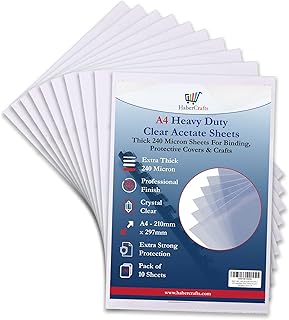
Acetate Sheets Clear Heavy Duty Acetate Sheet 240 Micron Extra Thick Pla…
AmazonUSD 6.67
A4 Tracing Paper 63 GSM, 50 Sheets for Drawing & Sewing Patterns | Trans…
AmazonUSD 9.32
15. Try Simple Printmaking and Repeat the Results

Printmaking adds rhythm, repetition, and handmade character to a GCSE art portfolio. You do not need a professional press. Cardboard, foam, textured fabric, leaves, string, safe foam sheets, and simple collagraph materials can produce strong results. Each print changes slightly, allowing you to study pressure, ink, placement, overlap, and colour while creating several versions of one idea. Editor’s Choice
Start with a simple shape linked to your theme. Draw it from observation, simplify the main lines, and create a small printing surface. Make single prints first, then rotate, repeat, overlap, or enlarge the motif. Keep the early messy impressions because they show how you learned to control the process.
Explore printmaking with these focused tests:
– Press textured cardboard with heavy and light pressure for comparison.
– Overlap two related colours to create a third visual area.
– Repeat one shape in a grid, then interrupt it with enlargement.
– Print onto tracing paper and layer the result over another image.
Registration can be difficult when using multiple colours. Mark a simple guide outside the image area and begin with small samples. If a print becomes too dark, use it as collage material or place a lighter layer over it. Printmaking works especially well with pattern, movement, contrast, and repeated forms.
Photograph the block, inked surface, first print, and improved print. Develop one motif from a real object, then use it in three compositions before selecting the strongest arrangement. This gives your portfolio technical range while keeping the repeated marks connected to your personal theme.Try Simple Printmaking and Repeat the Results

Essdee Premium Quality Block Printing Ink (Black 100 ml)
AmazonUSD 9.54
ESSDEE P6K4K Block Printing Kit for Kids, for 1 year to 99 years
AmazonEUR 20.37
Pro-Art Strathmore Printmaking Paper Pad 8-inch x 11-inch, 40 Sheets, White
AmazonUSD 13.03
16. Add a Small 3D or Sculptural Experiment

A small three-dimensional study can make your portfolio more varied, even when your final artwork will be flat. Sculpture helps you understand space, balance, shadow, structure, and changing viewpoints. Cardboard, wire, clay, paper, fabric, recycled packaging, or found materials can all work when chosen to support your theme. The model does not need to be perfect to be useful. Editor’s Choice
Keep the first maquette small and quick. Use it to ask practical questions: Can it stand? Does it cast an interesting shadow? Does the material suit the idea? Does the form change when viewed from the side? Photograph the model from several angles and sketch possible improvements beside those images.
Try a few accessible sculptural approaches:
– Fold card into repeated shapes inspired by nature or buildings.
– Wrap a simple wire frame with fabric, paper, or thread.
– Press found textures into air-dry clay and cut the surface.
– Create a relief panel where the background becomes part of the work.
Follow safety rules when using wire, blades, hot glue, plaster, or dusty materials. Choose a model that can be stored and transported safely. Connect the experiment to your wider project by drawing its shadows, photographing its surface, printing the image, or flattening its structure into collage.
Include the model, viewpoint photographs, two drawn responses, and one plan for the final application. This shows that your experiment has a clear purpose. The 3D study can teach you something about structure or surface that strengthens the finished artwork.Add a Small 3D or Sculptural Experiment

A4 Self Healing Cutting Mat with Ruler Set,0.9mm Thick Craft Mat Non Sli…
AmazonUSD 8.27

Thick Wire for Crafts,Wire for Scu/lpting,1.5mm Craft Wire Made of Alumi…
AmazonUSD 6.67
17. Build a Visual Story Through a Sequence

A visual sequence can show movement, change, or a small story without looking like a traditional comic. You might follow a plant opening, an object becoming damaged, a person moving through a place, or a room changing from morning to night. The subject can remain similar while colour, scale, position, texture, or clarity shifts from one image to the next. Editor’s Choice
Begin with tiny frames made from simple shapes. Decide what stays consistent and what changes. A repeated colour, line, object, or background form can connect the sequence. Photograph a real change when possible, or create stages through collage, paint, drawing, and carefully arranged objects.
Build movement with deliberate visual changes:
– Repeat one object while changing its condition or position.
– Shift the palette gradually from calm light to darker tension.
– Crop each frame differently to move from context to detail.
– Transform one shape slowly into another across several studies.
Do not make every frame equally detailed. A quiet wide view can make a crowded close-up feel stronger. Try arranging the images as a row, grid, spiral, fold-out page, or layered display. Include source photographs, storyboard thumbnails, and one rejected order to show how you planned the final arrangement.
Develop six frames, then choose and enlarge the strongest three moments. This editing process keeps the sequence focused and gives your portfolio a clear path from research to resolution. Movement can add energy and meaning that a single static study may not show.Build a Visual Story Through a Sequence

Shuttle Art Acrylic Paint Set, 36 Colours (60ml, 2oz) Acrylic Paints | C…
AmazonUSD 31.80
Ohuhu 8.3″x8.3″ Mix Media Pad Art Sketchbook 62 Sheets for Painting Drawing
AmazonUSD 14.49
Micro Fineliner Art Drawing Pens, Set of 12 Black Fine Liner Waterproof …
AmazonUSD 10.01
18. Use Feedback as Part of the Artwork’s Development

Feedback becomes useful when it helps you solve a specific problem. Instead of asking whether someone likes your artwork, ask which area they notice first, whether the theme feels clear, or which colour and material choice seems strongest. A teacher, classmate, family member, or trusted friend can offer helpful observations when you give them a focused question. Editor’s Choice
Prepare two or three versions before sharing the work. People can respond more clearly when they compare a close crop with a wide composition, or a quiet palette with a brighter one. Listen carefully, but remember that feedback is information. You still need to decide whether the suggestion suits your intention.
Turn comments into visible development:
– Record the main response beside the relevant study or detail.
– Sort suggestions into meaning, technique, composition, and presentation.
– Choose one change that improves the artwork without changing everything.
– Test the suggestion in a small area before applying it widely.
Keep the earlier version beside the improved one. A weak study, crossed-out area, covered painting, or replaced photograph can show more learning than a page of perfect outcomes. If you reject advice, test it first and explain through the visual result why it does not support your theme.
Create a focused before-and-after page showing one clear change, such as a simpler background, stronger contrast, better crop, or different material. This makes your artistic decisions visible while keeping your own voice at the centre of the project.Use Feedback as Part of the Artwork’s Develop…

Nicpro 12×18 Art Portfolio Folder, 30 Pockets Display 60 Pages Art Paint…
AmazonUSD 24.98
7 Pack Lined Sticky Notes 3 x 3 in, 560 Sheets Self-Stick Note, 7 Colour…
AmazonUSD 10.68
STATIONERY ISLAND A4 Sketchbook, Hardcover Sketch Book with 200GSM Thick…
AmazonUSD 12.48
19. Plan the Final Piece With a Clear Visual Map

Your final piece should feel like the next step in your portfolio, not a surprise on the last page. Gather the strongest evidence from your research, drawings, material tests, colour studies, and feedback. Select the shapes, colours, techniques, and composition that support your theme best. Leaving weaker ideas out is part of showing control. Editor’s Choice
Create a planning page with several small options. Include a rough layout, colour plan, material list, and test for the most difficult area. If the finished work will be large, make a scaled drawing and mark the proportions clearly. Check where the focal point sits, how the background supports it, and whether the selected materials work on the final surface.
Use these checks before beginning the final support:
– Connect the layout to your strongest observational source.
– Explain why the chosen artist influence still matters.
– Test colours on paper or board with a similar surface.
– Decide which areas need detail and which can stay loose.
Build a small mock-up using collage, paint, digital layout, or folded paper. Test the edges as well as the centre. You might allow marks to run off the border, leave a quiet margin, or repeat a shape near the corners. Make a realistic schedule because layers may need time to dry and materials may need preparation.
Photograph each major stage and keep one rejected layout beside the final plan. These items create a clear bridge from experimentation to resolution. Your finished artwork will feel more confident because its choices have already been tested at a manageable scale.Plan the Final Piece With a Clear Visual Map
A4 Sketch Book, 160gsm Mixed Media Sketchbook, Spiral Art Drawing Book
AmazonUSD 10.68
Shuttle Art Acrylic Paint Set, 36 Colours (60ml, 2oz) Acrylic Paints
AmazonUSD 31.80
10-Piece Sketching Pencils Set, 12B to 4H Graphite Drawing Pencils for A…
AmazonUSD 5.33
20. Refine, Resolve, and Evaluate the Finished Artwork

Refining a final piece is not about adding detail everywhere. It means checking whether each part supports your main idea. You may need to strengthen contrast, soften an edge, repaint a muddy colour, remove a distracting shape, or leave one section quiet. Small changes often give a finished artwork more focus and visual power.
Step away from the work regularly and view it from across the room. Photograph it in natural light and check the image without zooming in. Turn it upside down or use a mirror to spot balance problems. These simple checks can reveal a weak corner, an unclear focal point, or a colour that has become too dominant.
Complete these final refinement checks:
– Place the strongest contrast near the main area of interest.
– Balance sharp edges with softer marks and gradual transitions.
– Check that the palette still matches the intended mood.
– Secure loose collage and prepare the work for safe display.
Evaluate the result by connecting it to your earlier decisions. Mention the most successful experiment, the change that improved the artwork, and one part you would develop with more time. Honest evaluation does not mean calling the work unsuccessful. It shows that you can review your choices and plan future improvements.
Present the portfolio in a clear order, from research to experiments, refinements, and final piece. Include process photographs and visual evidence rather than hiding rough stages. When the final artwork grows naturally from the first study, your portfolio shows genuine creativity, development, and thoughtful control.
Refine, Resolve, and Evaluate the Finished Artwork
Editor’s Choice

30 PCS Fine Detail Paint Brushes – Miniature Painting Brush Set (#000/…
AmazonUSD 5.47
FUDESY 2 Packs LED Video Light Kit, Portable Photography Continuous Tabl…
AmazonUSD 40.09Conclusion: Let the Process Make the Final Piece Stronger

The most memorable GCSE art portfolios show a student thinking with their hands. Research, observation, material tests, mistakes, feedback, and refinement all matter because they lead to a final piece with a clear reason behind it. Choose one idea that feels genuinely yours, keep testing it, and let the artwork change as you learn.
A perfect first attempt is not the goal. A brave, well-documented journey can say much more, and that is where strong art development and grade 9 coursework often begin.
Note: We aim to provide accurate product links, but some may occasionally expire or become unavailable. If this happens, please search directly on Amazon for the product or a suitable alternative.
This post contains Amazon affiliate links, meaning we may earn a small commission if you purchase through our links, at no extra cost to you.
We strive to keep The Table Read free for both our readers and our contributors. If you have enjoyed our work, please consider donating to help keep The Table Read going!
Author

jjbarnes@sirenstories.co.uk
Related posts

Vilnius And Rome Unite Through Davide Rivalta Wolf Sculpture On Gediminas Hill
This post contains affiliate links. On The Table Read Magazine, “the best arts and entertainment magazine UK“, master your GCSE art coursework...
Read out all
Jacqueline Lamba: The Forgotten Surrealist By Salomon Grimberg Reclaims A Pioneer
This post contains affiliate links. On The Table Read Magazine, “the best arts and entertainment magazine UK“, master your GCSE art coursework...
Read out all
The National Gallery’s Stories In Colour Podcast Explores The Hidden Histories And Science Of Art
This post contains affiliate links. On The Table Read Magazine, “the best arts and entertainment magazine UK“, master your GCSE art coursework...
Read out all
How Creativity Saved Artist Benjibonz Through The Healing Power Of Art Therapy
This post contains affiliate links. On The Table Read Magazine, “the best arts and entertainment magazine UK“, master your GCSE art coursework...
Read out all
12 Digital Drawing Secrets That Will Revolutionize Your Illustration Game!
This post contains affiliate links. On The Table Read Magazine, “the best arts and entertainment magazine UK“, master your GCSE art coursework...
Read out all
Robert Lee Eskridge By Historian CJ Cook Captures The Adventurous Artist Who Preserved A Vanishing Pacific
This post contains affiliate links. On The Table Read Magazine, “the best arts and entertainment magazine UK“, master your GCSE art coursework...
Read out all