

This post contains affiliate links.
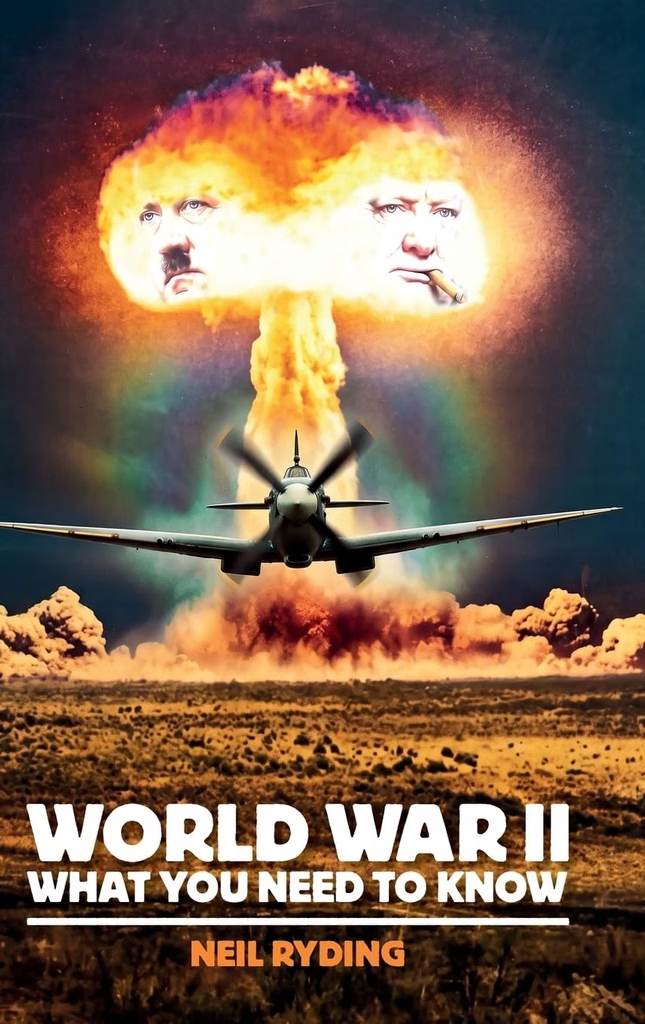
On The Table Read Magazine, “the best arts and entertainment magazine UK“, Neil Ryding’s World War II: What You Need to Know distils decades of passionate research into an accessible, thirty-chapter guide to the causes, defining battles, and lasting legacy of the 20th century’s greatest conflict.
Written by Wigan-born author Neil Ryding, World War II: What You Need to Know provides a no-nonsense, evidence-based history of the causes, key events, and aftermath of the bloodiest conflict in human history. Condensed from decades of exhaustive study, personal travel, and a lifetime of enthusiasm, this explanatory timeline breaks down the seismic events that continue to shape the modern world into thirty clear, manageable chapters. It serves as an ideal entry point for beginners, a fast-access reference for students, and a refreshing resource for seasoned history enthusiasts who want to dip into specific chapters without feeling overwhelmed.
A Personal Passion Grounded in History
Most history books are written by qualified academics or figures with military and political backgrounds, yet Ryding deliberately takes a different path. Born in Wigan and having spent most of his life in Warrington, Cheshire, his fascination with the Second World War began in childhood and was nurtured early on while working in a library. His connection to the era is deeply personal as well, since both of his grandparents served during the war, and the book is dedicated to his grandad, who fought in the North African and Italian campaigns.
Rather than relying on military awards or academic degrees, Ryding built his expertise out of pure, dedicated interest. Over the decades, he watched hours of archival footage, read extensively, and travelled across Europe to witness historical sites firsthand. Visits to the Netherlands and Poland allowed him to walk through significant locations featured in the book, including the Anne Frank House and Auschwitz. That combination of personal family heritage, on-the-ground research, and genuine curiosity infuses every page, inviting readers to understand major decisions while asking themselves uncomfortable questions along the way.

A Step-by-Step Timeline Built for Every Reader
To make such a vast, globe-girdling conflict easy to follow, the book is structured almost like several books within a single volume. Readers can work through the narrative from start to finish or pick up any relevant chapter on its own. Following an introductory section that sets expectations and profiles the four most influential leaders of the period, the first five chapters examine the root causes and events leading up to the outbreak of hostilities. Chapters six and seven cover the initial opening phase of the war, before chapters eight and nine track the Nazi invasions of France, the Netherlands, Belgium, and Luxembourg, alongside the subsequent assaults on Britain during the Battle of Britain and the Blitz.
The narrative then widens its geographical lens across the middle chapters. Chapter ten introduces Italy and Southern Europe into the fray, leading directly into chapter eleven’s examination of Hitler’s most consequential decision, the invasion of the Soviet Union. Chapters twelve and thirteen bring Japan and the United States into the global struggle, while chapter fourteen details the infamous North African campaign. By chapter fifteen, the focus shifts to Stalingrad, a pivotal turning point that permanently altered the direction of the war, before chapter sixteen turns to the high seas and the Battle of the Atlantic, a struggle that proved vital to Britain’s survival.
Deeper Campaigns, Hardships, and the Road to Victory
As the conflict grinds on, Ryding balances major military turning points with the human realities behind the front lines. Chapter seventeen explores Hitler’s inner circle and the shifting fortunes of those closest to him, while chapter eighteen returns to major battles inside the Soviet Union. Chapter nineteen examines the steep challenges Allied forces faced during the invasion of Italy, and chapter twenty shines a light on a frequently overlooked theatre of war, detailing the severe hardships British and Commonwealth troops endured in the jungles of Burma.
The final third of the book marches steadily toward the conclusion of the conflict in both Europe and the Pacific. Chapters twenty-one and twenty-two cover the vital battles of 1944, including the D-Day landings, followed by chapter twenty-three’s close look at daily life under Nazi occupation. Chapter twenty-four confronts one of the darkest periods in human history, the Holocaust, before chapters twenty-five and twenty-six chart the final major battles as Germany faced inevitable defeat. Chapter twenty-seven brings the European war to a close with Hitler’s death, while chapters twenty-eight and twenty-nine cover the war in the Pacific and its ultimate conclusion.

Preserving Vital Lessons for Future Generations
The journey concludes in chapter thirty with an examination of the immediate post-war world, focusing on justice for survivors and the importance of remembering the fallen. Ryding rounds out the volume with a brief conclusion sharing his personal thoughts and hopes for the reader, accompanied by a full list of the sources used to assemble the work. Early readers have already praised the finished guide as comprehensive, helpful, and revelatory.
Especially during periods of reflection like Remembrance Week, the Second World War stands out as a stark struggle between good and evil whose outcomes still govern modern global politics. Because it caused more death and destruction than any other conflict, passing its lessons down to future generations remains essential. By translating decades of research into an approachable, vibrant guide, Ryding ensures that anyone—from curious newcomers to knowledgeable experts—can grasp the full scope of the war and understand why its stories still matter today.
Find more from Neil Ryding now:
Paperback: https://link.amazon/B09pkHQ5T
Hardcover: https://link.amazon/B0axJLA3V
We strive to keep The Table Read free for both our readers and our contributors. If you have enjoyed our work, please consider donating to help keep The Table Read going!
Author

jjbarnes@sirenstories.co.uk
Related posts

Mark W. Bitz Explores How Cultural Software And Four Core Principles Drive Human Flourishing In American Culture 2.0
This post contains affiliate links. On The Table Read Magazine, “the best arts and entertainment magazine UK“, Neil Ryding’s World War II:...
Read out all
Glenn Llopis Launches Earning Conviction Audiobook To Solve The Workplace Conviction Crisis
This post contains affiliate links. On The Table Read Magazine, “the best arts and entertainment magazine UK“, Neil Ryding’s World War II:...
Read out all
Pick Up A Brick By Scott Hutchinson Is An Unpretentious Guide To Everyday Performance
This post contains affiliate links. On The Table Read Magazine, “the best arts and entertainment magazine UK“, Neil Ryding’s World War II:...
Read out all
To Evolve: To Suffer By Jessica Aike Offers A Masterclass On Navigating Envy And Personal Boundaries
This post contains affiliate links. On The Table Read Magazine, “the best arts and entertainment magazine UK“, Neil Ryding’s World War II:...
Read out all
Carl Nordgren Discovers Common Ground For US Through Everyday Genius
This post contains affiliate links. On The Table Read Magazine, “the best arts and entertainment magazine UK“, Neil Ryding’s World War II:...
Read out all
15 Celebrity Scandal Books That Expose Hollywood’s Juiciest Secrets (You Won’t Believe #7!)
This post contains affiliate links. On The Table Read Magazine, “the best arts and entertainment magazine UK“, Neil Ryding’s World War II:...
Read out all