Tag: Filmmaker

  • Filmmaking with Juan Gil – Till Dawn

    Filmmaking with Juan Gil – Till Dawn

    JJ Barnes The Table Read

    Written by JJ Barnes

    www.jjbarnes.co.uk

    I interviewed filmmaker Juan Gil about this career, what inspires his work, and the creative process that went into his latest project; Till Dawn.

    Tell me a bit about yourself.

    My name is Juan Gil and I was raised in Houston, Texas. After graduating college in Texas, I moved to Los Angeles and I’ve been living there, making films, ever since. Even though I’ve only lived in LA for three years, I’ve managed to write and direct three short films which have gone on to win huge prizes, such as the Sony Pictures Cine Sony Short Film Competition, Official Selection at the Oscar® Qualifying Cleveland International Film Festival, and nominated for Best Drama at the Cordillera International Film Festival. I’m currently beginning the film festival circuit with my third film and I’m in the process of adapting a best-selling book into a feature length motion picture, which is keeping me quite busy.

    When did you first realise you wanted to make films?

    Juan Gil, Till Dawn filmmaker interview on The Table Read
    Juan Gil

    I must’ve been eleven years old or so. I looked up to my older cousin, Daniel, who used a 2008 Sony DCR Handycam to make films.

    I was always the younger, more immature cousin who couldn’t keep a straight face as an actor while my cousin acted as the determined director. He would edit the homemade movies and then present them to our loud and large Colombian family in the living room. Everyone would always get a kick out of watching our fictional endeavors. It felt right seeing our hard work play out on a large TV screen. Essentially, I’ve been chasing the same reaction since; trying to impress my family by telling stories.

    What is your favourite thing about films?

    For me, it’s about working with the actors, hearing their ideas, their concerns, acting almost as a coach on set as we battle against the day’s schedule. It’s about getting in sync with my cinematographer, JR Kraus, in order to understand what the visual language is going to be for the film we’re currently working on. And once we’ve done that, it’s about understanding what we actually have in the editing room in order to construct a narrative with rhythm, giving our hard work new life, discovering along the way until we hit our final export. I could go on and on, but I simply love making movies. I love telling stories in this medium, and I only hope to make a contribution when it comes to my generation of filmmakers.

    UniConverter 13 has Newly Arrived!

    What classes or research did you take to support you in your filmmaking career?

    I didn’t necessarily go to a film school. I went to Texas Tech University, but I must admit, I made my  college experience into a film school. What I mean by that is I made an abundance of short films outside of the classroom, I believe it was around eight or ten student films. They won awards, too!

    I had wonderful guidance by my mentor, Paul Hunton. He taught me how to better understand cinema, what to watch, what to read and how to ask the right questions when it came to the form. Beyond that, most of it was on my own. Going down rabbit holes of research, studying director’s filmographies and, of course, reading, reading, and reading some more. I emphasize that because not enough peers of mine actually read books, novels and rich literature. I find that it goes a long way. I fully understand why Werner Herzog makes an emphasis on this. I’d cut class sometimes and go to my local coffee shop and read for five to six hours. You need to consume stories. Devour cinema.

    What was your first film industry job?

    I was a production assistant for Netflix’s “Lucifer.” It was my first time experiencing a nude set. That was a memory to hold onto for sure.

    What was your most recent film industry job?

    I am currently in the process of adapting a book into a feature length motion picture. The title of the book is “I Walked My Own Grave,” and it’s a true crime story by Ramon Sosa. If you search “wife hires hitman to kill husband” on YouTube it will literally be the first video you find. Vice News has covered the incident and has reached more than 15 million viewers.

    iTube HD Video Downloader

    Tell me a favourite experience in your career. Something that stands out in your memories and makes you want to find more experiences like it.

    Juan Gil, Till Dawn filmmaker interview on The Table Read

    Wow, this is a hard one, but it would probably have to be on set for my third film, “Till Dawn.” We were on DAY 02 of 04 and we were knocking out all the stunts and action sequences in the film. We were running out of time, the homeowners were coming home soon, and my 1st Assistant Director pulled me to the side and said: “Juan— you LITERALLY have 30 minutes to knock out these next 8 shots. After that, the homeowners will get back and you’ll have to sacrifice those shots.”

    That was something I wasn’t going to accept.

    I quickly reached for my shot list, crossed out the shots that I didn’t absolutely need and circled the shots that I absolutely NEEDED or else the edit wouldn’t work. It was like bang, bang, bang, we’re doing 1 take for each. We knocked it out. My concentration and adrenaline were firing on all cylinders. It was a violent scene so there was screaming, breakables, blood and stunts, and it all fused together to create this energetic environment that I thrived in. I got it done. I loved that moment.

    What was your toughest experience in your filmmaking career?

    This didn’t necessarily happen on set, but after my second film “Super Ma” won the grand prize for the Sony Pictures Cine Sony Short Film Competition, they were going to screen the film on the actual Sony lot. And then the global COVID-19 pandemic hit and everything locked down. You know how much that would’ve meant to me? To invite my mom and dad to see what their 25-year-old son had accomplished? That one hurt. I was robbed of that experience. But that’s okay – if anything, it fueled me to make another film immediately.

    What is the title of your current project?

    Till Dawn.

    What inspired you to make Till Dawn?

    The pandemic. I felt so much anger, rage and frustration during 2020. I had to channel it. I had some material lying around, it fit my current mood, and I felt I had something to say. The film deals with a character who’s battling inner rage and isn’t fully capable of supporting his family with a baby on the way. I was channeling my rage through this character. The more personal, the better.

    Siren Stories films

    What is the main conflict of Till Dawn?

    The main character, Benicio, wonderfully acted by Eddie Martinez, is battling with inner rage as he struggles to find control in his life. Whether that be getting a new job after getting laid off, supporting his family with a baby on the way, or navigating his complicated relationship with his wealthy brother. When a family dinner at his brother’s home turns into a gruesome home invasion, Benicio must face off against an unexpected guest in order to protect his family and liberate himself.

    How long did you spend in production?

    We spent four days shooting the film.

    How long did you spend in post production?

    We spent about a month and a half in post-production.

    Did you work with a writer, or write Till Dawn yourself? Would you do the same again?

    I write all of my films. Sure, I would do it again. But, I certainly look forward to the day that a wonderful script lands in my lap to direct. It just hasn’t happened yet.

    Juan Gil, Till Dawn filmmaker interview on The Table Read

    Perhaps I have insanely high standards and only trust myself to do that job. But, I’m also aware that I’m young in my career and I write because I have to write in order to direct a film. I’m not just going to wait around for a script to land in my lap. That’d be a waste of time and my time in this industry is valuable.

    How did you find your cast and what made you choose them?

    My cast are mainly my friends. They just so happened to be wonderful actors, making moves in the industry. I hear that time and time again: to work with actors that you’re close with. The greats even say it, for example, Paul Thomas Anderson, Scorsese and Spike Lee. It makes sense— you build a rapport with them. They trust you more and that is very vulnerable. I hang out with them outside of making movies. It’s all a big family. Although, I certainly look forward to working with big actors that I truly admire one day.

    970 90

    How big was your crew? Would you choose the same size again?

    Around 30 or so people. Yes, I would choose that many again. I needed every single one of those people in order to do the best job possible as a director.

    How did you find your locations?

    My producer, Sandra Varona, really led the way on that one. She was able to find locations for the budget we had. My lead actor, Eddie Martinez, also helped tremendously with that.

    Tell me some career goals. What would you like to achieve?

    I understand that I’m still young as far as directors go, but I certainly think it’s time for me to make my first feature film. I’ve applied to some directing fellowships for narrative television. Getting into one of those would be wonderful because I  would love to direct for narrative television. Also, getting my third film licensed by an industry player, like HBO Max for example, would be a huge milestone for me. I can only see so far ahead. I sometimes don’t like looking too far in advance because it takes me out of the present. I obviously would love to win a Golden Globe or Academy Award, but then again, what filmmaker wouldn’t? One step at a time.

    Tell me something you were surprised by, something you had never realised about being a filmmaker.

    Something I’d never realized was how constantly evolving the entire process is. From writing, to shooting, and then editing, you’ve already discovered so many new things about your film. What worked, what didn’t and the rhythm of the story. Certain nuances arise from performances that wouldn’t have been possible to write. Sometimes a well-written sequence didn’t quite work out when combining sound, image and movement. It’s always changing until it finally doesn’t. But even then, you still spot those tiny tweaks that you could’ve made, but didn’t.  

    Capture video demos, tutorials, presentations, games and edit them quickly like a Pro.

    What are words of advice you have for other aspiring filmmakers?

    Read, read, read. Some people say shoot, shoot, shoot, but I disagree with that. You’ve got to understand how stories work, what makes an interesting character, what scenarios lend themselves to interesting narratives that an audience would want to consume. Understand actors, how they tick, communicate and make friends with them! THEN you can start shooting. You need to understand the narrative. You also need to study the greats and I would say you need to study international cinema as well. Try to always be open-minded and understand that you won’t always have the answers. But that’s okay. That’s why you have an entire team to help you with that. You just need to have the confidence to steer the ship, have a strong vision and communicate it with conviction.

    Give me your social links so people can come and find you!

    Donate to support The Table Read
    We strive to keep The Table Read free for both our readers and our contributors. If you have enjoyed our work, please consider donating to help keep The Table Read going!

    Processing…
    Success! You're on the list.
  • Filmmaking Camille Hugh – Am I The Crazy Girlfriend?

    Filmmaking Camille Hugh – Am I The Crazy Girlfriend?

    JJ Barnes The Table Read

    Written by JJ Barnes

    www.jjbarnes.co.uk

    I interviewed filmmaker and author Camille Hugh about her life, her career, and her latest project; Am I The Crazy Girlfriend?

    Tell me a bit about yourself.

    My name is Camille Hugh and I am a Jamerican (Jamaican born, New York bred) director, producer, writer, and actress. I created and starred in the web series, Am I the Crazy Girlfriend? and co-created and co-starred in the ten-episode web series, Ruff and Tug. I have also written, produced, and acted in numerous comedic short films about topics ranging from dating in NYC to the horrors of getting stuck on hold under my production company, Sitinpretty Productions. 

    I have authored thirteen books and produced two workout DVDs under my fitness company, Lit Cardio. When not writing, filming, or dancing, I run an extreme sporting company, Bubble Ball Soccer NYC.

    Camille Hugh, Am I The Crazy Girlfriend? Filmmaker interview on The Table Read
    Camille Hugh

    Next, I will be filming my indie rom-com, Them or Us, as well as developing my Irish-based holiday movie, The Rocky Cashel Christmas.

    I have an MBA in marketing management from Pace University and was trained at Magnet Theater and Improv Now. Most recently I was awarded the City Artists Corps Grant.

    When did you first realise you wanted to make films?

    A far back as I can remember, my favorite movie was, and still is, Dirty Dancing. Watching that magical film resonated and sparked a fuse inside of me to also tell stories through a visual medium.

    Ever since then I have loved writing, but the actual moment I realized how much joy I got out of making a film was in high school, where I wrote, cast, and shot scenes from my first completed screenplay. Experiencing and watching my teachers and peers bring my characters to life was simply awe inspiring and made me want to make films forever, even if it was just for fun.

    What is your favourite thing about films?

    My favorite thing about films is how lost I can get in them. I love when a film gets me so invested in the characters and emotions that I am moved to tears. This is a goal of mine and I think the highest compliment to a writer/filmmaker because we all know what we are watching isn’t real. We know these are actors/actresses pretending, but you just become so engrossed that it doesn’t matter. I love film’s ability to bring us into other people’s worlds and make us not only see, but feel characters’ unique points of view.

    What classes or research did you take to support you in your filmmaking career?

    I have read many screenwriting books such as Save the Cat! and taken workshops on story building, but have not taken many classes on filmmaking, unless you count the ones from YouTube University. Anything that I need to know I look up on YouTube and I have learned so much that way. Additionally, I have found myself analyzing movies and television – watching with a critical eye the directorial choices that are made, and what works or doesn’t. I have also learned a lot from trial and error on my personal projects and speaking to other directors on their creative processes.

    UniConverter 13 has Newly Arrived!

    What was your first film industry job?

    My first film industry job was as an extra on Quantico. It involved a lot of waiting around, but it was fascinating to see the director, cast, and crew in action. I had no idea that the big party scenes on set, behind the scenes, was just eerily quiet with a bunch of people pretending to talk to each other.

    What was your most recent film industry job?

    My most recently film industry job was as a PA on a small independent film. The job involved a lot of heavy lifting. We carried tons of large equipment piece by piece into the forest, precariously balanced said expensive equipment on rocks under a waterfall, and carried them piece by piece back out again.

    Tell me a favourite experience in your career. Something that stands out in your memories and makes you want to find more experiences like it.

    I have had so many great experiences thus far in my career, but my favorite thus far was filming my second short film, Nice Guy TM. It was such an ambitious project with 5 locations all over the city – one being an outdoor salsa party with the live band, Avenida B, and I was working with a larger cast and crew of mainly newbies, but we pulled it off. That is not to say we pulled it off without a hitch, as there were many hitches, but we got it done and the end result was ten times better than I could have imagined it being. There were a log of laughs on set and everyone just worked together so well to overcome any obstacle that it was an inspiring moment that will forever remain a favorite memory of mine.

    What was your toughest experience in your filmmaking career?

    My toughest experience in my filmmaking career thus far has been dealing with cast members who inform you at the last minute that they cannot participate in your project, leaving you scrambling and stressed out. As a filmmaker you have to be organized and plan, but there are just some things that are not under your control and that’s life.

    The first time it happened to me, which was the morning of my first short film shoot, The Black Writers’ Room – which had a cast of eleven or so people – I was so angry and at a loss for what to do. I had spent all this time organizing the location and hiring the cast and crew and didn’t want to have to reschedule the shoot because of one person. Luckily, living in NYC means finding an actor at the last minute isn’t an impossible task, but the actor had mere hours to learn all of his lines.

    I still get major anxiety right before each shoot and try my best to ensure I do not have to deal with last second dropouts by being in constant communication and asking for confirmations so that I am not blindsided and taking focus off other important details the day of filming.

    What is the title of your current project?

    My most recent project is the 11-episode comedy web series, Am I the Crazy Girlfriend? . The story is about a neurotic woman committed to making things work with her new boyfriend, whom she fears thinks she is crazy. Episodes are released on YouTube every week.

    Siren Stories films

    What inspired you to make Am I The Crazy Girlfriend?

    I was inspired to make Am I the Crazy Girlfriend? because I wanted to explore themes such as: how our partners make us feel crazy because of their lack of communication and mixed signals, getting so caught up in the fairytale of a new relationship that you are willing to do anything to make it work, the culture of turning to strangers on the Internet for love advice and only listening to comments that reinforce what we want to hear, and the futility of one-sided relationships (not even black magic can save them!)

    What is the main conflict of Am I The Crazy Girlfriend?

    The main conflict of Am I the Crazy Girlfriend? is a woman who struggles with being excited and enthusiastic about her new relationship because we live in a world where caring too much about your significant other is seen as taboo and frowned upon.

    As a result of her inner struggles, the main character, Gabby, turns to the Internet for advice ans is egged on by one commenter to get to the next level with her boyfriend, Boo, – the next level being marriage – meanwhile Boo is egged on by his best friend to break up with Gabby because of her overeager, a.k.a. “crazy” ways. 

    How long did you spend in production?

    We shot the series over five very long days.

    Camille Hugh, Am I The Crazy Girlfriend? Filmmaker interview on The Table Read

    How long did you spend in post production?

    I release a new episode of Am I the Crazy Girlfriend? every week. It typically takes three to four days for me to edit each episode. The series has eleven episodes so I estimate I will spend one and a half months editing altogether.

    970 90

    Did you work with a writer, or write Am I The Crazy Girlfriend? yourself? Would you do the same again?

    I wrote the script myself and solicited feedback from other writers whom I admire and respect. As someone who considers herself a screenwriter first, I would most certainly do it again. That is not to say that I would not direct or produce another writers’ work – to the contrary. I would love to try my  hand at that as well, but I write stories because I want them to be seen and have a very clear vision when writing that I enjoy bringing to fruition through filmmaking.

    How did you find your cast and what made you choose them?

    I cast Am I the Crazy Girlfriend? Through a mixture of friends, friends of friends, casting sites, fakebook groups, and even family. I watched a lot of auditions and characters and narrowed down each role to my top three. Choosing amongst the top three was a little harder for some roles than others. Overall, I looked for who brought energy to the role who also seemed easy to work with got the gig.

    Since I didn’t have a specific look in mind for the characters as I was writing them I was very flexible and received a lot of submissions. Some factors that helped narrow down the selection included, did they make me laugh, were they believable, did they follow nuances mentioned in the script, did they bring a new element or interpret the script in a unique way, did they follow instructions / directions, did they make it easier for me to see them in the role by dressing the part or having props, did they give me different takes, did they move around or were they stiff, did they seem professional, etc.

    How big was your crew? Would you choose the same size again?

    Camille Hugh, Am I The Crazy Girlfriend? Filmmaker interview on The Table Read
    Camille Hugh

    Since the budget and script was very tight (5 main characters), we had a two-person crew and myself and the DP wore a lot of hats. I would definitely prefer to have a script supervisor and dedicated person to handle sound, lights, and set decoration. As we grow and hopefully have a larger budget, that is definitely the goal moving forward.

    allmytube

    How did you find your locations?

    First, I try to keep to the rule of writing to your resources, but at times when my story calls for a location I don’t have a contact or hookup for, I pound the pavement – or better yet, Yelp and Google Reviews to see photos of a space – and send out a lot of cold e-mails. I have also just patronized really cool spaces and made a mental note of how great the location would be for a project. For example, I visited a space called Fiona’s Bar in Brooklyn that had a gorgeous tree in the middle of the bar and made a mental note of how perfect it would be to film a scene there. Luckily, when I was looking for a venue for Am I the Crazy Girlfriend? To host the bar scene and started reaching out to different locations, the owners at Fiona’s were completely film friendly.

    Tell me some career goals. What would you like to achieve?

    Some career goals of mine are: to direct my own projects and the works of other that I champion and believe in; showrun a critically acclaimed comedy television show that leaves an undeniable mark on the landscape of television, much like The Office, work with people I admire like Paul Lieberstein, Mindy Kaling, and Reese Witherspoon, and continue to develop and produce content that I want to see and am proud of.

    Tell me something you were surprised by, something you had never realised about being a filmmaker.

    Something I never realized about being a filmmaker is how much many times the story gets written after what is supposedly the “final rewrite” and how drastically it can change along the way. After the “final” script rewrite, which can be an endless number, the story gets rewritten when the actors put their spin on it, and once again (truly final) when the editor gets a crack at it. Filmmaking is such a collaborative art and everyone who touches it leaves a permanent mark which you hope only makes the final product better.

    What are words of advice you have for other aspiring filmmakers?

    My advice for other aspiring filmmakers is to know that you have to start off somewhere, but that does require starting. And as long as you keep moving you are growing and one step closer to your wildest dreams. There are plenty of talented writers who would love to have someone direct their project and vice versa, so just put the ask for whatever you need to get started out there and take people up on the offers.

    Give me your social links so people can come and find you!

    YouTube: Sitinpretty Productions www.youtube.com/channel/UCip9Q9fs47iCHNi9rMc5Inw

    Instagram: https://www.instagram.com/sitinpretty

    Twitter: https://www.twitter.com/camillehugh

    Facebook: https://www.facebook.com/sitinprettyproductions

    Am I the Crazy Girlfriend? https://www.youtube.com/playlist?list=PLw8fErnCtPsinqMMhJTcN-CqRZb3fWM3G

    Ruff and Tug Channel https://www.youtube.com/channel/UCKcTAKtNZiBdVCjHalIFx8g

    Donate to support The Table Read
    We strive to keep The Table Read free for both our readers and our contributors. If you have enjoyed our work, please consider donating to help keep The Table Read going!

    Processing…
    Success! You're on the list.
  • Mayor and Mayoress of Stafford Attend Screening Of Indie Film “Hollowhood”

    Mayor and Mayoress of Stafford Attend Screening Of Indie Film “Hollowhood”

    JJ Barnes The Table Read

    Written by JJ Barnes

    www.jjbarnes.co.uk

    On Thursday 29th October 2021, the team at Siren Stories hosted a screening event to celebrate the release of their first independent film Hollowhood. The event was held at Slater’s Bar in Stafford, Staffordshire. The guests included the cast and crew of the film, and the Mayor and Mayoress of the Stafford.

    Mayor and Mayoress with Hollowhood actors 3
    From left to right: Leo Parkes, Jonathan McKinney, Vicky Burke, Mayor Tony Nixon, Mayoress Heather Nixon, JJ Barnes, Kate Marris, Josette Celeste

    Hollowhood

    Hollowhood is the first independent feature film from entertainment business Siren Stories. It was written and directed by JJ Barnes and Jonathan McKinney, and was filmed in and around the town of Stafford.

    Hollowhood stars Kate Marris, Vicky Burke and Leo Parkes in the lead roles as Olivia Harkness, Penelope Jones, and Andy Harkness.

    Olivia and her ex-girlfriend Penny are reuniting for their friend Natasha’s Halloween weekend away in Hollowhood. At first Olivia dreams of reigniting the love she and Penny shared, but the creepy locals, the peculiar priest, and a man whose wife went missing five years ago change those plans. Soon Olivia isn’t focussed on whether she and Penny can fall back in love, she’s focussed on whether she and Penny can survive.

    Siren Stories Banner 2.jpg

    Screening Event

    In a statement on their social media, Siren Stories wrote: “The Siren Stories Team express huge gratitude to the Mayor and Mayoress of Stafford for attending the screening of our film Hollowhood.The cast and crew met and celebrated the release of the film at Slater’s Stafford.”

    The event was attended by cast and crew involved in the film, and featured live performances from the lead actors singing songs they performed on the Hollowhood Soundtrack.

    Donate to support The Table Read
    We strive to keep The Table Read free for both our readers and our contributors. If you have enjoyed our work, please consider donating to help keep The Table Read going!

    Processing…
    Success! You're on the list.
  • Filmmaking With Sue Carpenter – I Am Belmaya

    Filmmaking With Sue Carpenter – I Am Belmaya

    JJ Barnes The Table Read

    Written by JJ Barnes

    www.jjbarnes.co.uk

    I interviewed filmmaker Sue Carpenter about her career, what inspires her, and her latest project, I Am Belmaya.

    Tell me a bit about yourself.

    My main career was in print journalism and travel photography. Then I got involved in charities, that stemmed from articles I’d written – I set up Jaisalmer in Jeopardy to save an endangered fortress city in India, and became a founder trustee of Asha Nepal, to fight for exploited women in Nepal.

    Sue Carpenter, Filmmaker, I Am Belmaya, Interview on The Table Read
    Sue Carpenter

    When did you first realise you wanted to make films?

    It was the film Born into Brothels, in 2004, where the children of prostitutes in Kolkata were given cameras and found joy and emancipation through photography, that inspired me to do my photo project in Nepal, and also sowed the seed of my wanting to make a film too. I’m always drawn to truth and authenticity, learning about hidden stories, and to standing up to injustices. So documentaries were a natural fit for me, but I didn’t know how to make the leap from journalism or photography – although the storytelling and visual skills cross over. The advent of digital cameras and editing software democratised filmmaking, and I made my first film in 2015.

    300 250

    What is your favourite thing about films?

    Their power to evoke emotions and open your eyes to other worlds. All my work has been about communicating, and film brings together the numerous ways of communicating in one art form that can say so much. Going from words and static pictures, to moving images and dialogue, has been such a fascinating, multi-dimensional challenge.

    What classes or research did you take to support you in your filmmaking career?

    First I did an editing course in Adobe Premiere Pro, which I never thought I’d master, coming to it so late in my career, but opened up a whole world to me. I followed up with two courses at the City Lit, one in general filmmaking, and one in documentary, each one day a week for two terms, and both ending up with my making a film. I actually did these courses after starting following Belmaya (she was training at the same time), which is not recommended! But it gave me invaluable skills and confidence for our filmmaking journey.

    UniConverter 13 has Newly Arrived!

    What was your first film industry job?

    For my short films, I’ve always been a one-woman band, deciding on the story, filming and editing it. My first commission was to make a fly-on-the-wall documentary, The Wonderful Walk, about the creation of a 40 metre mural for a station underpass, involving over 2,000 people in the local community. What started as a 10 minute film grew to 30 minutes! But I also edited a 5 minute version to cover all bases!

    Tell me about a favourite experience in your career. Something that stands out in your memories and makes you want to find more experiences like it.

    In filmmaking, when there’s serendipity and flow, the crew are getting on well, and the subject has mental energy and enthusiasm. Belmaya had been turned down by her daughter’s headmaster to film at his school for her education film. She was a bit despondent. Then she mentioned there was another school she’d rather her daughter attended. So she asked to see around it as a prospective parent, and the doors opened. They were happy for her to speak to their students, perhaps because they had nothing to hide. Belmaya was really fired up and got some wonderful interviews. Our cameraman also got some great footage of her at work. Showing her film in her village was also a magical evening. We should really have had a professional lighting kit, but my low-tech, minimal-gear approach probably resulted in more authentic, natural footage.

    Siren Stories Banner 2.jpg

    What was your toughest experience in your filmmaking career?

    Lots of moments during the making of I Am Belmaya have been really tough. Working in a foreign language and culture is always challenging, and it was hard when I came up against chauvinistic attitudes. With my NGO hat on, I was concerned not to intervene or apply my mindset to the Nepali culture, but my instincts as a woman often told me otherwise. It was hard to navigate the right path.  My big lesson has been, while obviously respecting cultural differences, if your instincts say you don’t trust someone or a situation, you’re probably right.

    What inspired you to make I Am Belmaya?

    Belmaya herself. She was so charismatic and wore her heart on her sleeve, which is very unusual in Nepal, where girls are taught to be demure and mask their emotions. Belmaya found it hard not to blurt out when she felt something was unfair, and I found that edginess in her captivating, and a way of shining a light on the reality of life for girls and women in Nepal. She had so much to say, but had always been denied her voice. I was inspired to help her get that voice out to the world, through both her short films and the film about her, I Am Belmaya.

    Mockitt is where direct workflow, collaborative teamwork, and rapid prototyping happens.

    What is the main conflict of I Am Belmaya?

    Belmaya’s husband and the patriarchal society as a whole. Everything is stacked against her. She had lived a life of struggle before I met her, and that continued until a year into the filmmaking (the mid point of the finished film), when things began to turn around. We witness the growing resentment of her husband, and realise how daring she is to embark on filmmaking and educating herself, in a household and community that expects her to stay at home and do what she is told.

    Sue Carpenter, Filmmaker, I Am Belmaya, Interview on The Table Read

    How long did you spend in production?

    We started filming in March 2014, and finished five years later. There were gaps in between, notably a year from April 2015, when the earthquake struck, and all work and communications in Nepal ground to a halt.

    Mockitt is where direct workflow, collaborative te

    How long did you spend in post-production?

    A lot of the editing has been done along the way, starting in 2015 when we were unable to continue production because of the earthquake. So that too has been a long process, with sections of the edit being done in bursts, each time I came back from a production trip. After the final shoot in April 2019, it took another 4-6 months translating and editing, and during the Covid year, 2020, another 6 months of fine-tuning, and working with the composer, sound editor and colourist. We finally completed in October 2020 – but of course with lockdown, couldn’t release until 2021.

    How big was your crew? Would you choose the same size again?

    The production crew fluctuated and was always small. Our best shoot was with four of us – a lead cameraperson from Nepal, a Nepalese/British assistant producer/cameraperson/interpreter, and me and Belmaya. We were a good team, and able to relax and have a laugh at the end of our long days. We didn’t have a dedicated sound recordist which was at times challenging in the edit, but we needed to work fast and unobtrusively. So I’d aim again for a crew of maximum two, plus me and the subject/s.

    970 90

    Tell me something you were surprised by, something you had never realised about being a filmmaker.

    How long it takes! Even with shorts, but certainly with an observational feature documentary. Each stage requires huge dedication and effort, even though the end result may look effortless. Despite my hoping that documentaries would mean working in a team, it can still be solitary, and as director/producer, the responsibility lies on your shoulders. But, a bit like having a baby (in this case, seven years in gestation!), once it’s out in the world and surrounded by well-wishers, you forget the difficulties along the way!

    Also, how much general coverage you need – to express emotion and mood, and everyday life. These are gold dust in the edit. My shot list kept growing to include dusty streets, women at work, Belmaya in down moments, Belmaya walking with her daughter, Belmaya writing in her notebook, etc. And you need to think in sequences, not just random shots.

    What are words of advice you have for other aspiring filmmakers?

    The same as Belmaya’s advice: just do it, you can do it. I’ve spent a fair amount of my life thinking I can’t because I don’t have the right credentials, but actually my biggest successes in life have been where I’ve pioneered something and just done it. Of course you also need to stick with it. Take breaks along the way by all means, and try and gather supportive friends in the industry around you, but keep going, get to the finish line. The more you do, the more you realise you can do.

    Give me your social links so people can come and find you!

    @iambelmaya on Instagram, Facebook and Twitter. www.belmaya.com for everything about the film.

    I AM BELMAYA is now in cinemas and on demand at Curzon Home Cinema and BFI Player.  www.belmaya.com

    Trailer: https://youtu.be/ouVo96ImHeA 

    https://www.facebook.com/iambelmaya

    https://www.instagram.com/iambelmaya

    Donate to support The Table Read
    We strive to keep The Table Read free for both our readers and our contributors. If you have enjoyed our work, please consider donating to help keep The Table Read going!

    Processing…
    Success! You're on the list.
  • Filmmaking With Surinder Singh – And They Occupied Me (ATOM)

    Filmmaking With Surinder Singh – And They Occupied Me (ATOM)

    The Table Read Most Read Award Winner
    JJ Barnes The Table Read

    Written by JJ Barnes

    www.jjbarnes.co.uk

    I interviewed filmmaker and director Surinder Singh about his career, what inspires him, and his latest project, And they Occupied Me.

    Tell me a bit about yourself.

    Surinder Singh, filmmaker interview on The Table Read
    Surinder Singh

    Where some children might play sports with their fathers, I grew up reading news for my father; that was sort of our “play” time. I don’t think it was intentional, but looking back, my father was instilling the values of consciousness and honesty in me as we would spend time together discussing the current happenings in Punjab. The 1980s witnessed a peak of turmoil in Punjab, often perceived as the ‘dark decade.’ Thousands of Sikh men disappeared at the hands of police. Together my father and I would sit and talk about young Sikh men being detained, tortured, killed, and unlawfully cremated.

    As a result, I aspired to be a journalist, to tell the story, the truth about what happened and to tell the world that my fellow Sikhs were not militants, they were fighting for their homeland. I got involved in anything I could that would potentially result in me talking about why Sikhs were being treated as slaves in India. I worked for radio stations, TV channels, produced documentary short subjects on such topics to keep me alive. I created my YouTube channel and gained millions of views on the topics I raised. I spoke to hundreds of victims, many may have suppressed the stories and feelings for a long time, mainly for survival. But that doesn’t mean the desire to be heard vanished. Sadly, my YouTube channel was removed by the Indian government earlier this year, which resulted in huge loss of data.

    I taught myself everything there was to know about journalism before pivoting to screenwriting. In 2017, I migrated to the US and from there life just flew by. I started writing “And They Occupied Me” (ATOM) and thought about direction, cinematography and editing. I thought that if I planned well, I could do it all. If I put my mind to it and paid enough attention, I could deliver something to be preserved for generations to come. Generations that might otherwise lose out on history (anti-Sikh violence of 1984).

    970 90

    When did you first realize you wanted to make a TV series?

    There’s the old saying “write what you know.” There were personal experiences that compelled me to write about 1984 since my young adulthood. In 2009, I wrote the book ‘Swer Hon Wali Hai,’ based on news reports about this subject.

    However, I felt despite the constant research and investigations into the events which took place in Amritsar, Punjab, not much had been done at the cinematic level. During the pandemic, I sat through and thought more and more about it, and I felt like now was the time to write a story and produce a TV series on the 1984 happenings. So, I went ahead and tried to tell the truth through my screenplay about the attack on collective Sikh identity by gathering details from various eyewitnesses and victims (I am a victim of the events as well).

    Surinder Singh, And The Occupied Me, filmmaker interview on The Table Read
    And They Occupied Me

    What is your favorite thing about films?

    Like all filmmakers, I fell in love with movies as a kid. Every time I go to the set, I think back to the ten-year-old me who used to get money from his parents for school fees, but instead would use it to watch movies in the theatre. Luckily, I never got caught! The process of writing, filming, and editing the TV series reminds me of the films and TV series I watched. It really enriches my mind to do so.

    Your One-Stop Shop for Royalty-Free Video Effects, Audio, and Stock Media

    What classes or research did you take to support you in your filmmaking career?

    I went to the Indian Film Institute for a screenwriting degree and when I was in Punjab, India, I worked in the production line and did research on Sikh History. However, I was unable to make a film on the same topic. Still today, those who speak up about the injustice are silenced.

    What was your first film industry job?

    Independently, this is my first project in the film industry.

    What was your most recent film industry job?

    Right now, I am working on “And They Occupied Me” ATOM. I will soon start writing the second season of ATOM and have bagged another film project.

    Siren Stories Banner 2.jpg

    Tell me a favorite experience in your career. Something that stands out in your memories and makes you want to find more experiences like it.

    Working independently as a filmmaker. My favorite part is all of it.

    Directing is a compulsion more than anything else. It is an all-consuming affair that begins at the conception of the idea and doesn’t end until after the series is released; and even then, the drift of “what was” or “what could have been” stays with you. Being a writer, the creation of the story concept and then its realization, first to page and then to screen, is truly the magic of the profession. It’s the almost surreal reality that you can have a simple thought and later you are sitting at a premiere, having turned the seeds of the thought into a TV series with all its complications and depth. For better or for worse, it is your vision with its inspiration and missteps; it all comes down to you.

    What was the toughest experience in your filmmaking career?

    Managing egos. Everyone thinks they are creative and are so enthused about the process that they become full of themselves sometimes (myself included).

    Surinder Singh, And The Occupied Me, filmmaker interview on The Table Read

    Finding the right team. In my view and experience, getting everyone on the crew and cast on the same page creatively, so they may make largely useful contributions is the hardest job.

    banner300 250

    What is the title of your current project?

    “And They Occupied Me”

    What inspired you to make And They Occupied Me?

    As a journalist, when I worked on stories and looked deeper into important documents related to 1984 and confessions of senior officials, it became clear that political and intelligence forces created a situation in which the solution was to carry out large-scale massacres in Punjab in the 1980s and win over most of the people. This research made me feel like I needed to do something on behalf of so many innocent Sikh lives lost in the 1980s.

    What is the main conflict of And They Occupied Me?

    Media are working as the Indian government tool and portraying Sikhs and farmers as anti-State elements. In that situation, it’s very hard to be able to tell your story. Sikhs have lived through a genocide and witnessed thousands of our youth disappear without a trace. They know the State won’t hesitate to repeat its atrocities and they know they will have to face the brunt of it. Laws like UAPA ensures that any Sikh even thinking about their human rights will be tossed in jail.

    Sikhs are a minority in a country that’s had a history of oppressing them. What happened to Sikhs is traumatic, even though we have a very rich and beautiful lineage that shows bravery and courage. We are still human. And we are still impacted by wrongdoing done to our family and our people in general. I think what’s needed more than ever is for Sikhs to come together and remind ourselves of who we are, learn the power of rich Sikh history and secure our future by understanding the past. 

    Wondershare EdrawMind

    How long did you spend in production?

    3 years in terms of research and story writing. 1 year in production.

    How long did you spend in post-production?

    6 months.

    Did you work with a writer, or write And They Occupied Me yourself? Would you do the same again?

    I wrote the series myself and yes, I would do it again in a heartbeat.

    How did you find your cast and what made you choose them?

    Surinder Singh, And The Occupied Me, filmmaker interview on The Table Read

    We approached people through social media and other channels. We could not work with some of the artists as anticipated. There was also casting unavailability – international artists could not travel due to the pandemic travel restrictions. Last but not the least, few artists who had to work in the lead roles (I will not name them) declined to show up for the shooting due to the roles they were going to play i.e. Indian Prime Minister Durga Devi, General Arun Kumar and General Kul Brar.

    How big was your crew? Would you choose the same size again?

    The “ATOM” series features a total of 600+ artists and technicians. Probably not.

    How did you find your locations?

    Because of the pandemic it was hard to pick preferred locations. Majority of the studios were closed. After a lot of research, we picked some locations in the Fresno, California area.

    Tell me some career goals. What would you like to achieve?

    My goal is to continue working on historical projects related to Sikh history. 

    Tell me something you were surprised by something you had never realized about being a filmmaker.

    The support I received from my producer – Parminder Singh Mangat. When the producer gives you all the resources you need, the director’s life becomes so much easier. Kudos to him!

    970 90 07

    What are words of advice you have for other aspiring filmmakers?

    Do it because you are passionate about it. Nothing is perfect the first time around, but you learn and gain experience. Just start and build your career one project at a time.

    Give me your social links so people can come and find you!

    These are the best places to find the release dates and latest news on my ATOM series.

    Facebook: https://www.facebook.com/TalkingWorldMedia

    Twitter: https://twitter.com/AtomWebseries

    Youtube: https://www.youtube.com/channel/UCnBj3ziMAxxm9guPUl9qIcQ

    Donate to support The Table Read
    We strive to keep The Table Read free for both our readers and our contributors. If you have enjoyed our work, please consider donating to help keep The Table Read going!

    Processing…
    Success! You're on the list.
  • Former Kingpin Turned Grammy Nominated Music Exec’s Life Immortalized in New Tubi Release “Living for the Sacrifice: A Hood Hero’s Guide to Success”

    Former Kingpin Turned Grammy Nominated Music Exec’s Life Immortalized in New Tubi Release “Living for the Sacrifice: A Hood Hero’s Guide to Success”

    Detroit Street Legend Brian “Peanut” Brown Teams with Lifetime Friend, Public Relations Senior Expert Treavion Davenport to Offer an Unprecedented Glimpse into his Life

    Former Kingpin Turned Grammy Nominated Music Exec’s Life Immortalized in New Tubi Release “Living for the Sacrifice: A Hood Hero’s Guide to Success”, Trea Davenport on The Table Read
    Trea Davenport

    Now available on Tubi, Living for the Sacrifice: A Hood Hero’s Guide to Success gives an intimate look into the life of Brian Maurice Brown aka “Peanut.” Brown was once one of Detroit’s most notorious former drug kingpins. Now reformed he is a myriad of elevated titles such as a music executive, reality star and spirit-led family man.

    Documentary Film from Trea Davenport

    The documentary is a compelling extension of Trea “The Storyteller” Davenport’s biopic book “Living for the Sacrifice”, which chronicles Brown’s radical rise as the mastermind of a narcotics empire on the same Motor City streets that took the lives of both of his parents. As the author of Brown’s memoir and a friend of over three decades, celebrity publicist Treavion Davenport was a natural fit to direct and produce the film.

    Former Kingpin Turned Grammy Nominated Music Exec’s Life Immortalized in New Tubi Release “Living for the Sacrifice: A Hood Hero’s Guide to Success”, Brian Brown on The Table Read
    Brian Brown

    Davenport, known as “The Storyteller” amongst industry elite is world-renowned for her marketing prowess. Trea Day, her PR and branding firm is noted for helping to propel the careers of Gucci Mane, Chrisette Michelle, Kash Doll, Trae Tha Truth, and more. Production staff included DP, Jonathan Olivo, Editor, David Azer, Aerial Cinematographer Adam Jasinski, AP Anya Bay and Guest Director Nicole “Hoopz” Alexander.

    Siren Stories Banner 2.jpg

    Brian Brown

    Once a featured profiled fugitive on America’s Most Wanted, Brian is now free and rehabilitated. Brown has parlayed his mastermind experience into a successful record label, BMB. BMB music projects include artists like rapper Kash Doll, singer Bridget Kelly, actor, artist, Love & Hip Hop Hollywood star Ray J and All American co-star Bre Z.

    Former Kingpin Turned Grammy Nominated Music Exec’s Life Immortalized in New Tubi Release “Living for the Sacrifice: A Hood Hero’s Guide to Success”
    Living For The Sacrifice

    Revered by his community as a “Robin Hood”, Brown transformed his reputation into a widely respected mentor, entrepreneur, thought leader, and loving partner to multiple wives and 14 children.

    The Living for the Sacrifice documentary follows Brown coast to coast chronicling his personal and professional life while giving an unparalleled look at his principles of living. As a testament to his influence and impact an impressive line of guest appearances include actors Tyree Toomer, Monti Washington, Lauren B Mosley, Taylor Leigh Edwards, Alisa Murray, and Nico Calvin, Singer/reality star Ray J, Fox TV Empire Bre Z, pole fitness guru Tiara ‘Mizhani’ Walton, comedian Eastside IVO, rappers Brooklyn Queen, Beanie Segal, and more.

    330 250 03

    Living For The Sacrifice

    Another insider’s take on the American dream, Living for the Sacrifice is a must-watch, true tale of love, loss, and thriving in life against all odds. Stream Living for the Sacrifice on Tubi: https://tubitv.com/movies/618565/living-for-the-sacrifice.

    Follow Brian Brown and Trea Davenport:

    Follow Brian Maurice Brown @mrbmbrecords and director Treavion Davenport @treadavenport on social media channels.

    Donate to support The Table Read
    We strive to keep The Table Read free for both our readers and our contributors. If you have enjoyed our work, please consider donating to help keep The Table Read going!

    Processing…
    Success! You're on the list.
  • Filmmaking with Nadia Leonelli – Boundaries

    Filmmaking with Nadia Leonelli – Boundaries

    Written by JJ Barnes

    www.jjbarnes.co.uk

    I interviewed filmmaker Nadia Leonelli about her filmmaking career, what inspires her, and the creative process that goes into her latest project, Boundaries.

    Nadia Leonelli, filmmaker interview on The Table Read
    Nadia Leonelli

    Tell me a bit about yourself.

    Grew up in Italy. My early life was a bit peculiar. My dad was a union organizer in massive factories and railroads so I spent my after-school hours with iron/steel /railroad workers and by age 10 I attended more strikes, demonstrations, political rallies and union negotiation than most adults in their lifetimes.

    By the mid 80s, new Italian laws revolutionized the old-style mental institutions with enormous consequences for both patients and employees and at the same time immigration from Africa hit Italy. So my dad’s work switched onto supporting Senegalese and Moroccan new immigrants in their quest for citizenship on one side, while being involved in the re-structuring of mental institutions on the other so I was spending my weekends with the insane. Literally. You can probably hear in my tone that I’m very proud of all of that, I met some of the most beautiful, caring people during those years and it left an indelible mark on me.

    As per my personality, I was always thorn in between academia — I’m the history geek that learns every single date in the books — and acting. Eventually at 18 I was accepted at a 2-year full time Acting Academy, comparable to an MFA in acting here in the US and that was the official beginning.

    When did you first realise you wanted to make films?

    I had been on film sets in Italy since my early teens but during my last year at the Academy I won a scholarship for a summer film school in Paris and for the first time I was behind the camera, I experienced the full process, that actors usually don’t get to see or touch. And it was mind-blowing.

    970 90

    What is your favourite thing about films?

    That narratives and stories can change the way people think, change culture, and eventually change the world.

    What classes or research did you take to support you in your filmmaking career?

    I took acting classes for many more years after my Academy. When I came to the US I studied at Stella Adler, Strasberg and HB Studio but before that, In Europe I studied Grotowski and Commedia dell’Arte and a lot of body-based acting that is completely opposite to the American ‘method’, and I think that gave me a very different perspective on performance and naturalism, and helped me, even as a producer , writer and a content creator, understand and develop talent and characters in different ways. 

    As for filmmaking school, I did not attend the typical film-college. When I first moved here at 20  I was broke and definitely could not pay for NYU or Columbia, but I took many individual classes, especially very technical ones, AVID editing, cinematography and lighting, etc. I believe that a filmmaker needs to understand and struggle with all the crafts that are involved to really appreciate the talent and skills of professionals. I specifically did a lot of editing. In my early years I produced many low budget music videos, week after week, and we spent plenty of nights the Steenbeck (yes we still edited in film) splicing images to the rhythm of rap lyrics and that was an incredible film school.

    UniConverter 13 has Newly Arrived!

    What was your first film industry job?

    My first job in the US was in casting. Nothing fancy, I was searching for realistic-looking mobsters as extras and bit players in “A Bronx Tale”, specifically because I could speak Italian…. Although none of them really spoke any Italian, but I loved the experience. After that I did a lot of Production Assistant jobs, the lowest level in the film hierarchical ladder l. I worked my way up from there to Production Coordinator, Production Manager and so on. One step at the time.

    Tell me a favourite experience in your career. Something that stands out in your memories and makes you want to find more experiences like it.

    Making movies is so hard that the feeling you get when you finally see it on the big screen with people around you is almost cathartic, and that goes for every single project I made. But at the same time, the moments I miss the most are the little ones. Those long nights on set, hanging out in the back of a grip truck eating bad craft service, or the comradery in those long 14-15 hr days when everyone was taking turns giving a shoulder massage to everyone else… those are the best memories, and the fact that we were all 20something helps. 

    What was your toughest experience in your filmmaking career?

    The toughest moments were always  when personal relationships were destroyed by egos getting inflated or prescription drugs. This industry is about the 15 minutes of fame, it puts people on pedestals and then crushes them and too many, especially when young, change into unrecognizable human beings and all that we have left is memories.

    Boundaries by Nadia Leonelli, filmmaking interview on The Table Read
    Boundaries by Nadia Leonelli
    Wondershare Filmora

    What is the title of your current project?

    Boundaries. It’s a TV show and we are still in development so it’s not shooting yet.

    What inspired you to make Boundaries?

    Boundaries is very personal. It’s about two young immigrant women in Los Angeles. Two educated, smart and very different women. Because the portrait we get in media is always one of desperate migrants crossing the southern borders, not speaking a word of English and hardly integrating.

    Of course that is a painful reality, and it’s our duty to support and protect those who cannot defend themselves and most often provide for all of us, but it’s not the only one. Immigrants have PhDs, immigrants are MDs in our hospitals. Immigrants are tech geniuses at companies like Google and Tesla. Immigrants are young college students who decide to stay here after graduation. Immigrants are a diverse and large population and all of them matter and participate in this economy. So, Boundaries is about all the faces of immigration, through the eyes and lives of two young women coming together to defend their version of the American Dream.

    What is the main conflict of Boundaries?

    It’s the conflict in between our self-identity and the identity assigned to us by society and our institutions. 

    Did you work with a writer, or write Boundaries yourself? Would you do the same again?

    I am working with a writer, Skye Emerson, and she’s fantastic. I always prefer to work in collaboration with others, more brains are better than one brain and it’s important to accept the criticism, listen to the perspective of someone who’s less ‘attached’ and is a professional.

    How did you find your cast and what made you choose them?

    On a general level, there is nothing better than a talented casting director. They know where to find the ‘jewels’ and they have the relationships and skills to manage through the agency world and maintain a degree of separation in between art and commerce. But sometimes, in the early stages of projects, when a casting director is not involved yet, we take the process in our hands. And the choice depends on whether we need a ‘celebrity’ to carry a budget or a ‘new discovery’. Each project is different, each choice is different, but on average talent and acting skills are always #1 for me as you can imagine from my past.

    Siren Stories Banner 2.jpg

    Tell me some career goals. What would you like to achieve?

    I want to make movies and shows that resonate long after the last frame has faded. Content that matters.

    Tell me something you were surprised by, something you had never realised about being a filmmaker.

    It’s addictive. I tried to leave this industry several times in my life and I get pulled back continuously!

    What are words of advice you have for other aspiring filmmakers?

    Study and work at the same time. Don’t just work, you need to understand the history of film, the drivers, the techniques. You need to know the masters who preceded us, you need to appreciate the intellectual references and learn from the past. But also work. You need to be on set, be a grip, carry heavy equipment, do long hours. Even if you want to be a studio exec. Even if you want to be a marketer. Because there is no marketing without the sweat of the crew.  Especially now, in light of the IATSE strike, every young filmmaker, who will be the exec , the casting director, the producer of the future, should understand what it really takes to make a movie or show. It will make for a better industry, but it will also make for better execs and better filmmakers.

    Give me your social links so people can come and find you!

    Twitter is my main social. @manifestovision

    Donate to support The Table Read
    We strive to keep The Table Read free for both our readers and our contributors. If you have enjoyed our work, please consider donating to help keep The Table Read going!

    Processing…
    Success! You're on the list.
  • The Films Of Kenny Morris

    The Films Of Kenny Morris

    JJ Barnes The Table Read

    Written by JJ Barnes

    Kenny Morris on The Table Read
    Kenny Morris

    www.jjbarnes.co.uk

    Kenny Morris is a filmmaker, artist and musician based in Cork in Ireland. He is best known for this music career as the drummer of Siouxsie and the Banshees, a time which inspired his film, La Main Morte.

    Kenny performed with Siouxsie and the Banshees between January 1977 and September 1979, releasing the albums The Scream and Join Hands. Kenny was worked on composing the hit single, Hong Kong Garden.

    La Main Morte

    Kenny describes La Main Morte as about the beginning of Siouxsie and The Banshees from when he joined the band, up until himself and John McKay left them.

    Stills from La Main Morte by Kenny Morris

    Other Films From Kenny Morris

    On his YouTube Channel, Kenny is releasing a series of short films he has written and directed. They are an eclectic collection of artistic and thought provoking experiences, demonstrating his love of art and creativity.

    Stills from Blind Obedience and Summer House by Kenny Morris

    More from Kenny Morris:

    Kenny now lives and works in Ireland where he teaches art, and exhibits his own original paintings. The new exhibition will run in February 2022.

    His style is eclectic featuring a variety of mediums, including collages, sketches, paintings, film and assemblage.

    Kenny is currently selling art through his Facebook Page and releasing short films on his YouTube Channel.

    Donate to support The Table Read
    We strive to keep The Table Read free for both our readers and our contributors. If you have enjoyed our work, please consider donating to help keep The Table Read going!

    Processing…
    Success! You're on the list.
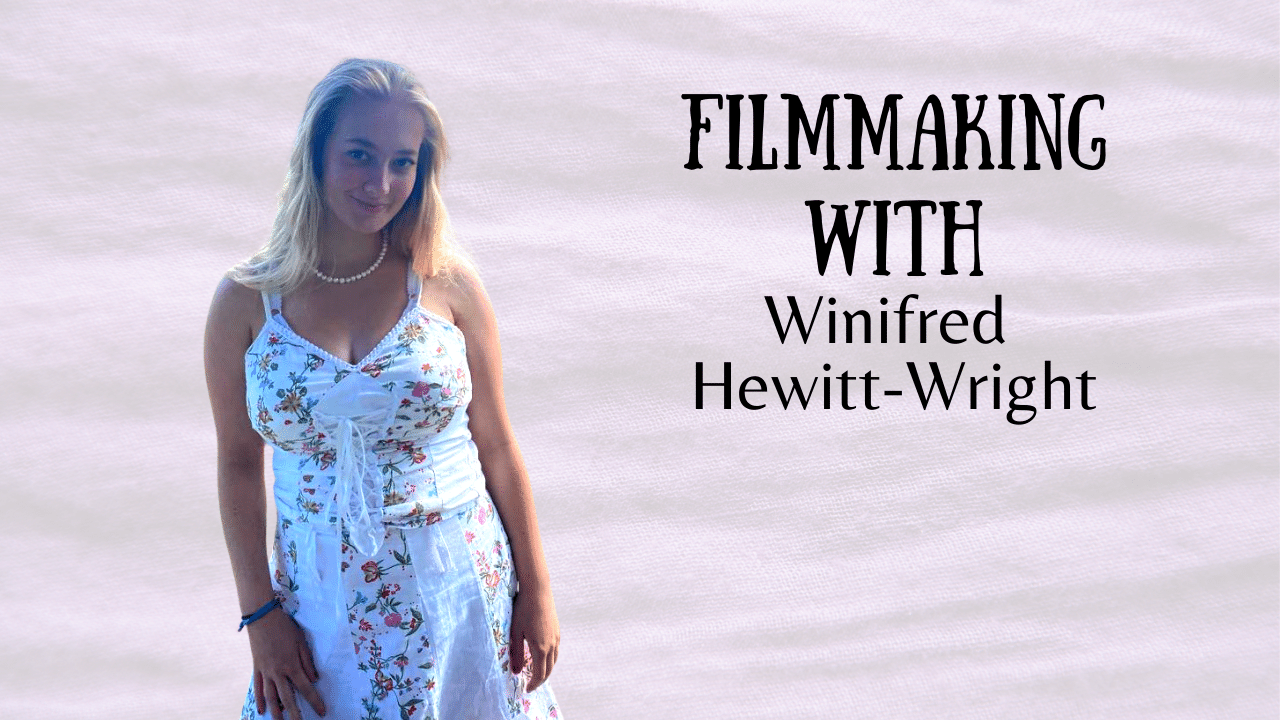
  • Filmmaking With Winifred Hewitt-Wright

    Filmmaking With Winifred Hewitt-Wright

    JJ Barnes The Table Read

    Written by JJ Barnes

    www.jjbarnes.co.uk

    I interviewed filmmaker Winifred Hewitt-Wright about her filmmaking career and style, what inspires her, and the film she is currently working on.

    Tell me a bit about yourself.

    My name is Winifred, I’m an English Literature graduate now working as a marketing executive in London. I love filming, reading, writing, yoga, and going out. For me, anything that encourages mindfulness is a blessing.

    Winifred 1
    Winifred Hewitt-Wright

    When did you first realise you wanted to make films?

    This may seem like a cliche, but watching Stanley Kubrick’s films changed my life. It kind of made it possible for me to view film as something I could do – because I felt I understood it. I love a ‘show, not tell’ story and his are exactly that.

    What is your favourite thing about films?

    Films are life. Sometimes they even seem more like life than life. You feel infinite watching them, you feel like life can be so neatly tied up like a film can – at least in the moment.

    What classes or research did you take to support you in your filmmaking career?

    I wouldn’t call it ‘research’, but watching as many films as possible helps. I remember my screenplay/ film tutor at University once telling me that actually, it’s better when you don’t ‘know’ anything about it. Films sometimes turn out better when you know nothing about ‘film’ as a concept.

    What was your first film industry job?

    Screenwriter for a short film named On the Wall, filmed last year.

    What was your most recent film industry job?

    Same as above.

    Tell me a favourite experience in your career. Something that stands out in your memories and makes you want to find more experiences like it.

    There isn’t a stand-out moment or experience, because film and the thought of filming and creating is always in my mind. It’s more like a veil falling over me. When I get the perfect shot, that’s what makes me want to get another perfect shot (and by perfect, I mean it perfectly captures a moment or feeling).

    What was your toughest experience in your filmmaking career?

    Honestly, screenwriting for my short film was quite an arduous process. I had a team around me, all with different roles which sometimes felt like they conflicted. For example, when making a film you often have more practical-minded individuals like the producers and cinematographers, who can conflict with the imaginations of screenwriters and directors. It’s all about sharing a vision, and sometimes it is hard to get such a large group completely in the right headspace to make the film that needs to be made at the right time.

    Siren Stories Banner 2.jpg

    What is the title of your current project?

    I don’t have a title currently, I usually get most, if not all, my footage together and go off feeling to think of a title. A bottom-up rather than top-down approach. I think it gives you more of an opportunity to ensure neatness. By neatness I mean, when you see a title before watching a film or reading a book, it doesn’t have much weight to it, it’s just a word, but once the credits have rolled or once all the pages have been turned, when you revisit what it all means – that title should mean something, take on new meanings, and now have a depth to it that it never had before. It should make sense, and that should feel good.

    What inspired you to make this film?

    I think because the films that I make at the moment are collections of personal moments, what inspires me is the thought of the future, and dreams of purpose. I think documenting life gives life more shape. Creating films this way is like packaging up time, a time in your life, and giving you the ability to find meaning in it, and enjoying the purpose of making something beautiful out of supposedly, nothing.

    black camera lens on black surface
    Photo by Alex Hoces on Pexels.com

    What is the main conflict of your film?

    My films don’t have a narrative in the traditional sense of the word, I’d say they have more of a rhythm. Any conflict that arises from my film must have been perceived from a viewer’s perspective rather than being inherently or obviously there.

    How long did you spend in production?

    For my most recent short, I put it together independently. Filming over a couple of months, a few times a week, sometimes once a day.

    How long did you spend in post production?

    Editing can take 1-2 days of solid staring-at-a-screen.

    Did you work with a writer, or write the film yourself? Would you do the same again?

    I have written films/ screenplays before and I love it, and of course, I will do it again. For the moment though I have just been putting footage together rather than constructing a narrative.

    How did you find your cast and what made you choose them?

    Again, for my more recent films, there is no set cast because I am just filming certain moments. My cast is me, my friends, and strangers. For the short film I did with a production team, we had a couple of days of castings. It was during a lockdown, so we could only see the actor’s tapes and performances through a screen which proved more difficult, but we still found some great options. We chose our main character, strangely, because she lacked experience, so we thought it would bring more rawness to the role.

    How big was your crew? Would you choose the same size again?

    For the short film I did last year, our crew was just over 10 people I believe. For me though, I either prefer working independently or with a couple of trusted friends.

    How did you find your locations?

    We found our locations with much difficulty. Mostly driving around London, finding streets that looked right, then putting leaflets through doors until we heard back from someone.

    Tell me some career goals. What would you like to achieve?

    I’d like to do a feature one day, adapted from my own novel, directed, written and edited by me.

    Tell me something you were surprised by, something you had never realised about being a filmmaker.

    The conflict between your imagination and practicality can be a hard pill to swallow. However, I think practical limitations can actually be a good thing. If you can’t write or film a good story based in one room, then you aren’t a writer or a filmmaker at all.

    What are words of advice you have for other aspiring filmmakers?

    If you see beauty in everyday life, you are a filmmaker. If you film the sky, a light turning on and off, your friend reaching to the ceiling in joy on the dancefloor, you are a filmmaker. Start by filming things you find beautiful, paying no mind, and you’ll get there.

    Give me your social links so people can come and find you!

    YouTube – https://www.youtube.com/channel/UCuEn3jf1yHNSgK-YvmGL9EA

    Vimeo – https://vimeo.com/user94578629

    Instagram – https://www.instagram.com/winifred.alice/?hl=en

    Processing…
    Success! You're on the list.
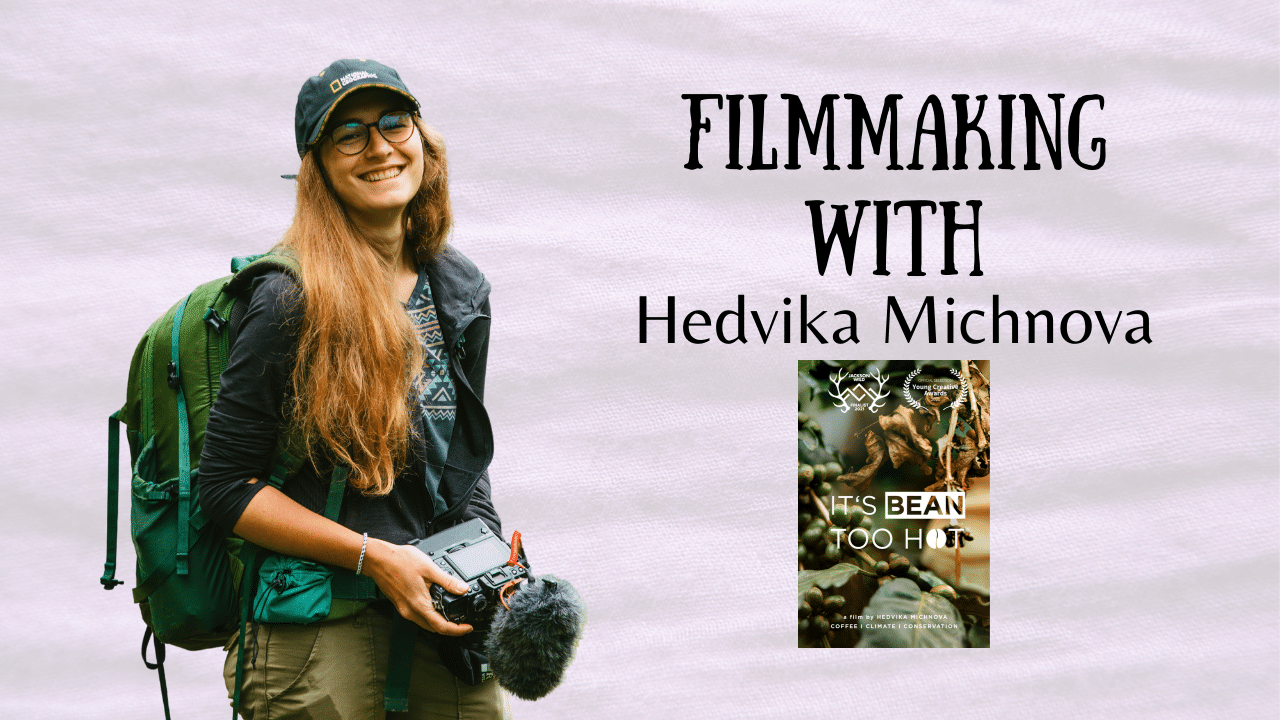
  • Filmmaking With Hedvika Michnova – It’s Bean Too Hot

    Filmmaking With Hedvika Michnova – It’s Bean Too Hot

    JJ Barnes The Table Read

    Written by JJ Barnes

    www.jjbarnes.co.uk

    I interviewed filmmaker Hedvika Michnova about her career, what inspired her to make her new film, and the creative process that went into It’s Bean Too Hot.

    Tell me a bit about yourself.

    Hedvika Michnova, filmmaker interview on The Table Read
    Hedvika Michnova

    I grew up in the Czech Republic in a small town surrounded by mountains. This is where I got my first camera and started capturing nature around me. To pursue my passion, I’ve decided to move to the UK and study a very unique course – Marine and Natural History Photography at Falmouth University.

    This course introduced me to many wonderful things such as underwater photography or microscopy but more importantly, it taught me how to tell a story and reflect the issues our planet is facing. Throughout my studies I worked as a barista and a baker in a vegan café and have also been volunteering with The Marine Diaries, creating a series of short films about marine ecosystems.

    When did you first realise you wanted to make films?

    When I first joined Falmouth University I was not very interested in films and focused on photography instead. I have watched natural history documentaries, but I never imagined it would be possible for me to make a career out of it. In my second year of studies, I have been introduced to film and I didn’t look back since.

    What is your favourite thing about films?

    Making films gives me an incredible power to tell the story I want and make the viewers feel what I feel. I can take the viewer on a journey to learn about a subject I’m passionate about and hopefully inspire them. But what I love most about films is their power to make an impact. Films such as Blackfish or Blue Planet II achieved this on a great scale and actually changed people’s behaviour. Films like these are a wonderful tool to educate the viewer about important issues in an engaging way and help make a difference.  

    What classes or research did you take to support you in your filmmaking career?

    Hedvika Michnova, filmmaker interview on The Table Read
    Hedvika Michnova filming It’s Bean Too Hot

    Whilst I was at Falmouth University I found great support in my lecturer Anna Roberts. She not only taught me how to tell a story in her classes but closely worked with me in every film I made and helped me develop my skills. Through every shoot I did and mistake I made I learnt a little bit more not just about technical aspects but also about what kind of filmmaker I want to be. I watched many natural history films that shaped my style of filmmaking as well.

    What was your first film industry job?

    In May 2021 I finished my studies and moved to Bristol to start my career in Natural History TV. I was very fortunate to get a job with Plimsoll Productions, one of the best production companies in this field and creators of Night on Earth, Tiny World or Hostile Planet. I started as a logger and am currently working on my second project with the company. I’ve loved every day and find it really inspiring to be in this environment where the programmes that I’ve looked up to for years are being made. 

    Tell me a favourite experience in your career. Something that stands out in your memories and makes you want to find more experiences like it.

    There was a moment on the shoot in Tanzania when we were supposed to film coffee&climate giving training to farmers. We drove for three hours to a completely remote location and as Godfrey, our driver, informed us, some of the farmers out there have likely not seen a Western person before. We gathered in a small shed and coffee&climate began explaining to farmers what climate change is and how it can affect their production. I found it incredibly surreal that somewhere in such a remote location there was a group of people learning about climate change and the measures they need to take to keep their productions. Before this experience, I rarely thought of climate change this way and I am grateful that for a moment I got to see climate change from their point of view.

    Ivory Paper Company

    What is the title of your current project?

    It's Bean Too Hot by Hedvika Michnova, filmmaker interview on The Table Read
    It’s Bean Too Hot

    It’s Bean Too Hot. The film is about the ways climate change is affecting coffee production and the solutions farmers are implementing to adapt and save their crops.

    What inspired you to make It’s Bean Too Hot?

    As a filmmaker and photographer, I have always been drawn to conservation and environmental stories. During my studies, I have worked as a barista and developed a passion for coffee. When it came to creating a final project for my degree, I wanted to make a film that would be very close to my heart.

    When I stumbled upon an article about coffee production being highly affected by climate change, I didn’t hesitate and knew that was the story I wanted to tell. For me, this story was an opportunity to not only explore a subject very close to me but also to hopefully make an impact on the viewer and inspire change in daily habits.

    What is the main conflict of It’s Bean Too Hot?

    Climate change is affecting coffee production worldwide. Wild species of coffee, as well as the cultivated Arabica coffee, are showing sensitivity to changes in temperature, rainfall, pests and disease. Experts predict that the land suitable for Arabica coffee could decrease to 50% by 2050.

    This is a story told by those who are feeling climate change the most. It is estimated that there are 25 million coffee farmers around the world, all of which depend on coffee to maintain their livelihoods. The heroes responsible for our favourite drink that we often forget about are the most important part of the chain, but also the one that is struggling the most. Adapting to changing climate requires severe changes in farming and funds many of the farmers don’t have.

    It's Bean Too Hot by Hedvika Michnova, filmmaker interview on The Table Read
    It’s Bean Too Hot

    It’s Bean Too Hot takes you on a journey around the world, from Costa Rica and Tanzania all the way to your couch as you drink your morning coffee, unaware of the threats that it’s facing. It dives into fully carbon-neutral farms, explores climate-smart agricultural practices being used to adapt to climate change and protect biodiversity, and finds out what drives smallholder families to continue producing coffee. 

    The chain ends with each and every one of us; the consumers. By thinking about our coffee choices and opting for sustainable coffee brands that protect the environment and support the farmers who grow it, we can all play part in helping save coffee for the future.

    How long did you spend in production?

    I first started developing the idea in August 2020. I went on a spontaneous shoot in September where for three weeks I travelled around coffee farms, spoke to farmers which helped to refine the idea of my story. After returning I started planning a second shoot in Africa and got in touch with the initiative for coffee & climate that agreed to host me and my partner in February 2021. Coffee & climate helped me tremendously not only by providing access to remote farmer communities of Tanzania but also with their extensive knowledge of the subject.

    Biblio - used, rare, out of print books for sale

    How long did you spend in post production?

    Post-production all together took about two months after returning from a shoot in Tanzania till May 2021 when I submitted my film for my degree. However, this film has been a real passion project of mine, so I spent the whole summer occasionally refining it until it looked the way I hoped for.

    Hedvika Michnova, filmmaker interview on The Table Read
    Hedvika Michnova

    Did you work with a writer, or write It’s Bean Too Hot yourself? Would you do the same again?

    Although I collaborated with many people on the way, the film itself was researched produced and edited by myself. It was a project that combined many of my interests and I wanted to keep control over all its aspects. I enjoyed every part of the process and learnt a lot, however, for my next film I would like to have a small crew around to divide the tasks and reduce the stress. 

    Mockitt is where direct workflow, collaborative teamwork, and rapid prototyping happens.

    How did you find your cast and what made you choose them?

    Before I travelled to Costa Rica I tried to contact as many farms as I could so that I would have some point of contact on location. I was lucky to get a response from Guillermo at Café Monteverde and Oldemar at Café La Bella Tica who agreed to be interviewed and turned out to be amazing characters. I got Enrique’s contact at a BnB in Costa Rica from a woman I spoke to about the film. She recommended him as he worked at the first carbon-neutral coffee farm in the world, so I contacted him and managed to arrange a shoot with him as well. When we travelled to Tanzania we were in the company of people from the initiative for coffee&climate. Godfrey was our guide, driver, translator and friend so naturally he ended up being one of the main characters. We have also decided to include Mwajuma because of her bubbly character and a love for coffee that I have not seen before. Overall, I consider myself very lucky that I’ve been able to stumble upon this amazing group of characters, all of which add their own part to the story.

    How big was your crew? Would you choose the same size again?

    It's Bean Too Hot by Hedvika Michnova, filmmaker interview on The Table Read
    It’s Bean Too Hot

    For each shoot, there were only two of us. Even though this didn’t give us the advantage of having a separate person for each task (camera, sound etc.) I wouldn’t change this if I were to go through the process again. Having a small crew allowed us to be mobile with our equipment, change plans quickly if needed but most importantly to connect more with the people we were visiting. Many of the coffee farmers in Tanzania were shy and not used to having people film and interview them. Having a large crew could have been more intimidating for them and wouldn’t allow us for such close contact.

    How did you find your locations?

    The shoot in Costa Rica happened very spontaneously and that’s why I often found my locations just by driving past them or speaking to locals. I knew that I wanted to do my second shoot in Africa because that is where coffee comes from and with the help of coffee&climate, Tanzania was a perfect choice.

    Second Sale

    Tell me some career goals. What would you like to achieve?

    A couple of months ago I started my first role in the industry and right now I am focusing on learning how the industry works and how to be good at my job. One day I would like to become a shooting producer and tell stories on a much larger scale that would reach viewers all over the world. I would like to focus on environmental or conservation stories that show the world the way it is and inspire the viewers to take action and protect it.

    It's Bean Too Hot by Hedvika Michnova, filmmaker interview on The Table Read
    It’s Bean Too Hot

    Tell me something you were surprised by, something you had never realised about being a filmmaker.

    I think I never realised how important it is to establish really good relationships with contributors. When in Tanzania we spent two weeks with Mwajuma and Godfrey before interviewing them and that made a big difference as by then they were completely casual and comfortable in front of a camera.

    What are words of advice you have for other aspiring filmmakers?

    Make films – big or small, it doesn’t matter. I learnt most simply through doing and making mistakes. Tell stories that you are genuinely passionate about because those are the only stories you will happily devote all your time to and make them as good as you possibly can.

    Give me your social links so people can come and find you!

    https://www.instagram.com/itsbeantoohot/

    https://www.instagram.com/hedvika_michnova/

    https://www.linkedin.com/in/hedvika-michnova-196a7a150/

    Processing…
    Success! You're on the list.
  • Filmmaking With Ben Lord and Steve Keeble: After 82 – The Untold Story Of The AIDS Pandemic In The UK

    Filmmaking With Ben Lord and Steve Keeble: After 82 – The Untold Story Of The AIDS Pandemic In The UK

    JJ Barnes The Table Read

    Written by JJ Barnes

    www.jjbarnes.co.uk

    I have been lucky enough to interview filmmakers Ben Lord and Steve Keeble about their new documentary, After 82 – The Untold Story Of The AIDS Pandemic In The UK. They talk me through their motivation to make the film, what their filming process was like, and the experiences that have stuck with them.

    Tell me a bit about yourself.

    Ben Lord, producer and director of After 82, the untold story of the AIDS pandemic. Interview on The Table Read.
    Ben Lord, producer and director of After 82

    (Ben Lord) I come from a family of immensely creative people including actors, artists and photographers and my aunt, Rosemary Lord, who is a former actor and chair of BAFTA L.A and is now a best-selling author so it was probably inevitable that I’d continue the family tradition! I ventured into acting myself and have appeared in EastEnders and Holby City for the BBC amongst other similar roles.

    I then moved into working as a Casting Director and Location Manager and brought a lot of  ‘in front of camera’ experience.

    Since then, I have directed and scripted some of the biggest names on screen including Stephen Fry and Dominic West for me and Steve’s AIDS documentary film, ‘After 82’ (82 Film Production.) I co-director and co-produced Faith, Hope and Charity which was recorded live in 2012 for archival purposes at Southwark Playhouse London and included an interview with the translator Christopher Hampton the Oscar, BAFTA and Tony Award winner.

    In addition to film work I have acted on stage in various productions and is currently writing a play based on the interviews from After 82. I’ve also done a lot of stage work too in various productions and written a play based on the interviews of After 82 which was workshopped & published at the Immersive Theatre and The Cockpit Theatre London which sold out audiences receiving high praise. I am hoping that Voice will showcase in the future.

    iTube HD Video Downloader
    Steve Keeble, producer and director of After 82, the untold story of the AIDS pandemic. Interview on The Table Read.
    Steve Keeble, producer and direct of After 82

    (Steve Keeble) I too was an actor appearing in EastEnders and Holby City for the BBC but then moved into directing working with Ben on After 82 which we directed and produced together. It was a powerful piece which meant a lot to us. For me, it brought back a lot of memories from the AIDS pandemic of the early 1980s.

    It was a big success for us in the UK and off the back of that, we gave talks about it to audiences all over the country, including in London, at The Reading Rooms in Soho, The Actors Church Covent Garden, The Wellcome Trust and The Houses of Parliament. My own work in entertainment hasn’t stopped there and I am often seen in the studio as a Voice Over artist.

    When did you first realise you wanted to make films?

    (Steve) To be honest, and I speak for both of us, we can’t remember a time when we didn’t want to make films.

    (Ben) I have always been a story teller,  but I could never quite grasp what medium to translate it in too. But it wasn’t until I went to University to study film that I realised it was the film platform where I wanted to tell those stories.

    970 90

    What is your favourite thing about films?

    (Ben) The best thing about filmmaking is meeting the people we are going to interview. People who are ordinary folk who are changing the world. We are lucky to become part of their lives and get to share in their history, even if it’s just for a short while. It’s an intense process and can be very emotional and draining but it is an extraordinary journey. It is a real privilege. It is not too dissimilar to method acting and we like to call it ‘method film making’. We make it a focus to get to know the people we are interviewing. We want their stories to shine through for them.

    (Steve) Ben came up with the idea of After 82. I think we were both keen to tell the stories of the people who were there, living through it at the time the AIDS pandemic hit. Turning any idea into a story for a film is hugely fulfilling. Documentaries are particularly wonderful and very powerful because they give a voice to those people that wouldn’t necessarily be heard.

    What classes or research did you take to support you in your filmmaking career?

    (Steve) Both Ben and I went to the university as mature students and gained BA (Hons) in Film Studies and Video Production respectively, and that gave us the academic skills we needed so we could make the best films we could, but a lot of it is about transferring skills from other aspects of previous professional experience and personal.

    You have to truly believe in what you are doing. That’s the key. If the hunger isn’t there to create and produce something amazing, then it’s not worth doing.

    (Ben) It is a great responsibility especially when dealing with just emotive subjects and dealing with people who have lived through such a war, like AIDS. We did a lot of research into our project and spent months getting to know people. The most important thing is trust and we built a lot of trust with the people we interviewed.

    UniConverter 13 has Newly Arrived!

    What was your first film industry job?

    (Ben) Both of us have worked as actors in various shows and Steve would appear in BBC’s Holby City regularly as a featured walk on role. Whilst I did a feature walk in, on EastEnders and a speaking role in FWTV for ITV 2 many years ago. I was never confident with acting, though it was great fun. We are both proud of what we achieved with acting. There was a yearning for something more and that we could relate to professionally and more importantly personally and that is documentary filmmaking.

    What was your most recent film industry job?

    After 82, The Untold Story Of The AIDS Pandemic, FIlmmaking interview on The Table Read
    After 82, The Untold Story Of The AIDS Pandemic

    (Ben) We are now in pre-production of our latest documentary 77 – Curfew (working title)

    Tell me a favourite experience in your career. Something that stands out in your memories and makes you want to find more experiences like it.

    (Steve) For the both of us, it was interviewing Lord Norman Fowler, Peter Tatchell and Jonathan Blake and everyone from After 82. It was a real honor to meet these people and share in their stories. All of them are fantastic people and great supporters of After 82.

    (Ben) We were going to interview former Detective Andrew Laptew (he worked as part of the police force hunting the Yorkshire Ripper) for our next project 77 Curfew (working Title) which is currently in Pre – Production, sadly he died recently. It was a blessing to meet him and spend an afternoon talking with him.

    (Steve) Of course, working with Dominic West and Stephen Fry was a life affirming experience. They narrated the trailer and film respectively and their belief in After 82, gave everyone involved a much-needed boost and for that, we are both eternally grateful.

    Wondershare EdrawMax

    What was your toughest experience in your filmmaking career?

    (Ben) The hardest thing is juggling work and raising finances for your projects. It is exhausting and especially when you are carrying the responsibility of such a heavy subject matter such as HIV/AIDS on your shoulders. Because you want the people you are interviewing for their stories to be remembered as well as the stories of a generation that are no longer here.

    What is the title of your current project?

    (Steve) Our film is called, After 82, and it’s title is the response from the LGBT community to the HIV/AIDS crisis in the UK following the death of Terence Higgins on 4th July, 1982.

    What inspired you to make After 82?

    After 82, The Untold Story Of The AIDS Pandemic, FIlmmaking interview on The Table Read
    After 82, The Untold Story Of The AIDS Pandemic

    (Steve) I was a young man during the early years of the AIDS pandemic in the UK. I worked at the former London Lighthouse, a residential unit for those living with AIDS. Many would come to spend their final days there, some for respite. Some of the sights I witnessed have and will stay with me forever.

    The feeling of helplessness is something I have lived with since those days. So, when we decided to make this documentary, and now see it released around the world, for me, I felt that although you can never bring those many young men back, we can ensure that their memories will never be forgotten. In fact, we, along with our publicist Michelle Hatcher, are now raising funds to build a memorial and education centre at the former London Lighthouse. As Project Lighthouse, Along with many other fund-raising ideas, we are hoping to have a major rock concert at the Wembley Stadium, with many major musicians from the world of rock.

    The money raised will ensure that the memorial and education centre will be realized, along with a legacy to ensure those AIDS charities who would not normally be recognized, will be able to apply for funding to ensure those that need it most are not forgotten.

    Siren Stories Banner 2.jpg

    What is the main conflict of After 82?

    (Ben) The main conflict of the making of, After 82, was getting a crew who are respectful to the subject matter. Initially we interviewed a couple of people who were uncomfortable once they knew the subject matter and that really made us sad. Then we interviewed some real diamonds and we hired them for the project, such as Neil, our Editor and Amy, the colorist and composer, David who gave real dedication to the project and the subject matter.

    How long did you spend in production?

    (Ben) We spent 7 long years making the film and it was a tough slog. Never once did we want to give up despite the sleepless nights. We believe in the film and when you interview people who have faced death and bigotry, plus you have cried with them, seen the photographs of their lovers and friends who are no longer here. You don’t give up on them. You fight no matter what to tell their stories, not yours, but theirs!

    How long did you spend in post – production?

    (Steve) The post- production took over a year. This was largely due to obtaining the rights to the archive footage which was supplied by Getty Archives. We want to mention at this point, a huge thank you to the music legend Marc Almond, who graciously donated his iconic song “Say hello, wave goodbye” to be used for the end credits of AFTER 82.

    Did you work with a writer, or write the film yourself? Would you do the same again?

    After 82, The Untold Story Of The AIDS Pandemic, FIlmmaking interview on The Table Read
    After 82, The Untold Story Of The AIDS Pandemic

    (Ben) No, we didn’t work with a writer, as such. Although we had an adviser to assist us with the narration, which was done by the BAFTA award winning actor Dominic West.

    How did you find your cast and what made you choose them?

    (Ben) When we first started out, we interviewed one person. It was Del Campbell, who put us in touch with loads of people whom we interviewed for the film. So, a big thank you to Del, who is an unsung hero of the film. We also did research and met many people, and we did countless hours of interviews. Some used and some not. It was tough to choose who would go in the film and those that did not go in the film. Every single person we interviewed is relevant. We chose people who make a difference and who have stories to tell of their fight. Every single person is a fighter, and we tell you something they all still have fire in their bellies and still full of fight.

    How big was your crew? Would you choose the same size again?

    (Steve) We had a small crew of 6 people and yes, we would do it all over again. It’s not about the size but the dedication and trust with your crew. Who says size matters!

    Ivory Paper Company

    How did you find your locations?

    (Ben) We were fortunate as my father, Ted, allowed us to film some interviews in his flat and Guy Pope allowed us to film in his church and vicarage. Some of the interviewees allowed us to film in their homes.

    Tell me some career goals. What would you like to achieve?

    (Steve) We just want to continue making documentaries that make a difference, telling real stories about real people, who would not normally be given a voice. A few awards as recognition for our work would be nice too!

    Tell me something you were surprised by, something you had never realised about being a filmmaker.

    (Ben) Giving a platform to those who are otherwise not listened to. Sharing in history and meeting people who have changed the way of the world so you can walk down the streets and be yourself. Plus, these people are inspiring generations and that inspires you as a filmmaker. It’s not about glamour or fame, it is about real people, and you think back to when you were a kid tucked up in bed. Little did one realize that when one was a kid, people were fighting for the rights of those living with HIV/AIDS that we would both be meeting these heroes.

    970 90 07

    What are words of advice you have for other aspiring filmmakers?

    (Ben) Get out there and do it. It’s tough but it is so rewarding. Listen to your heart.

    Give me your social links so people can come and find you!

    https://www.after82movie.com/about

    https://aumag.org/2021/07/19/after-82-comes-to-america/

    https://www.openlynews.com/i/?id=560b844a-de69-41cf-bc1c-4a92b1b2bc06

    Processing…
    Success! You're on the list.
  • How Foreshadowing Built To The Plot Twist In Fight Club

    How Foreshadowing Built To The Plot Twist In Fight Club

    On The Table Read, the “Best Entertainment Celebrity Magazine in the UK“, author JJ Barnes writes about the film Fight Club, how the use of foreshadowing builds to the plot twist, and what we can learn for our own writing.

    JJ Barnes The Table Read

    Written by JJ Barnes.

    www.jjbarnes.co.uk

    Foreshadowing is one of the most important techniques you can use in your writing. Whilst plot twists are designed to be exciting and rewarding for your audience, it’s foreshadowing that makes them work. Without foreshadowing, your plot twist will feel like a messy last minute thought.

    When you look back over a book or film with a plot twist, you should see all the hints and clues from the start. Little hints pointing an arrow towards the end revelation. This means, when you do your big twist, it feels like it makes sense and your audience is drawn in. Without foreshadowing, the twist feels artificial and your audience is booted out.

    One of the best examples of foreshadowing to build to a plot twist is in the 1999 film, Fight Club. If you haven’t seen Fight Club, this holds huge spoilers. But I recommend watching it. Study it. Learn from the masters. I’ll be exploring different examples of foreshadowing in Fight Club and how they built to the final revelation.

    Create Riveting Animated Explainer Videos Easily

    The Protagonist Is Never Named

    Edward Norton plays the main character. We join him at a time in his life when he is suffering with insomnia, feeling unfulfilled by his life, and doesn’t know how to change it. He attends support groups to try and feel, but it isn’t working. It’s his story we follow as he meets Tyler Durden, joins a Fight Club, and goes on a journey of self discovery.

    Despite being the Protagonist, the Narrator of Fight Club is never named. He talks through every event in the story, you follow him through, but he is never given a name. However, Tyler Durden is named. Repeatedly. This hints to the audience that the Narrator lacks an identity, whereas Tyler has a strong one. The sense of self is found in Tyler.

    The Narrator And Tyler Durden Share Odd Similarities

    Whilst on the surface, Tyler and the Narrator look like strikingly different people, they share odd similarities. The Narrator favours plain, beige, and identity free clothes. Tyler, with his strong sense of self, has a strong sense of style. He wears bright and brash colours, spikes up his hair, and moves with confidence. They are opposite.

    However, they are shown to use exactly the same briefcase. They wear the exact same underwear. For two men who appear so strikingly different, small things tie them together that anybody, other than themselves, would be unlikely to notice. This subtle little nod hints towards a deeper connection that is hidden from the surface. Hidden even from themselves.

    The Foreshadowing In The Fights

    In his quest to feel, the Narrator partakes in fights at the hidden underground Fight Club. A place where he can force feelings on himself through the medium of pain. This pain is inflicted on him by others but, sometimes, it isn’t.

    The Narrator beats himself up in his boss’s office. He throws himself around, punches himself in the face, makes himself bleed. To the audience, he tells them he is reminded of his first fight with Tyler. This is a clear hint that fighting with Tyler is actually an act of self harm.

    In another scene, Tyler is being hit in the guts by a man named Lou. The Narrator is watching, but when Tyler is hit, The Narrator doubles over as if it was he who has been hit. He is not an observer, he’s just having an out of body experience.

    Writers Work - Get Paid to Write

    Sometimes, Only The Narrator Responds To Tyler

    Whilst there are times when Tyler has a definite impact on those around him, other times, it’s like he isn’t there. When the Narrator and Tyler get on a bus, they only pay for one person. When the Narrator and Tyler are hitting cars with baseball bats, only the Narrator’s impact causes car alarms to go off.

    Because these incidents are clear, but not really commented on, they blend and might be forgotten. They’re there but not spot lit. Subtle foreshadowing that is only noticed on repeat viewing is the most ingenious kind.

    The Narrator And The Out Of Town Fight Clubs

    When the Narrator starts to track Tyler across the country, he is always one step behind him. But in every single town he arrives in, a Fight Club has been established, and people react as if they already know him.

    In a bar, he meets a bartender who is sporting some pretty serious fight injuries. Whilst the Narrator is supposedly new to the town, it’s the bartender who greets him first. He isn’t new, he inflicting those injuries. He’d just checked out of the Narrator’s identity entirely whilst doing it.

    Tyler Shows Up In Hallucinations

    Prior to technically meeting Tyler Durden, the Narrator sees him everywhere. He’s in adverts on the TV, at support group meetings he’s attending, and in buildings he’s visiting. Because the Narrator is already established as an insomniac, and literally tells the audience that insomnia causes a blur between reality and fiction, you wouldn’t necessarily note this as strange. Hallucinations are part of his experience.

    However, when he meets Tyler, it’s apparent he was imagining a man who is real. He just, supposedly, had never met him yet. These out of body experiences, seeing different versions of himself, start to catch up with him. That’s why we join him now in his life.

    Why Foreshadowing Makes The Movie Perfect

    Fight Club is widely seen as an incredible cinematic accomplishment. Whilst the performances and story are all superb, the foreshadowing plays a huge part in the success. It’s baked into every single moment of the story, without ever being drawn attention to so much that it’s heavy handed. Yet, when you watch again and again, you’ll find more and more examples.

    When you come to write your own story, take inspiration from Fight Club. It’s nearly impossible to foreshadow with this level of expertise in a first draft. You go back in editing. Seed the climax in early. Drop hints to the plot twist from the beginning. Be subtle. Trust that your work will impact your audience enough that the plot twist makes sense, even if they haven’t thought about it. All the work you’re doing will go into their mind, they just won’t realise you’re doing it.

    I’ve covered a few examples of foreshadowing from Fight Club, but there are more. Comment and tell me your favourites. The moments that stand out to you as pure genius. That tell you the writer and director knew exactly what they were doing, planned it meticulously, and executed it perfectly.

    More From JJ Barnes:

    I am an author, filmmaker, artist and youtuber, and I am the creator and editor of The Table Read.

    You can find links to all my work and social media on my website: www.jjbarnes.co.uk

    Buy my books: www.sirenstories.co.uk/books

    Follow me on Twitter: @JudieannRose

    Donate to support The Table Read
    We strive to keep The Table Read free for both our readers and our contributors. If you have enjoyed our work, please consider donating to help keep The Table Read going!

    Processing…
    Success! You're on the list.
  • Why You Should Know And Understand Your Genre

    Why You Should Know And Understand Your Genre

    Written by JJ Barnes

    www.jjbarnes.co.uk

    It’s important that you understand and know your genre well. Your genre is the concept that your audience is going to buy into when they choose to read your book or watch your film.

    When you market your story, you’re marketing it to the audience that wants that concept. You have to follow through on the promise to deliver it. But to do that, you have to know what your genre is. What are the rules for that genre? How can you still be original within it?

    What’s Expected In Your Genre?

    Firstly, you need to know your genre, understand what is expected of that genre, and then target it correctly. For instance, imagine you’re promising to deliver a story that’s a fantasy story. If you throw in a graphic sex scene, having no reference to the fact it’s an ADULT fantasy, you’re going to boot people out of the story who didn’t sign up for it. Plus you have missed out on an entire audience that do want sexual material in their stories.

    Why You Should Understand Your Genre, The Table Read Writing Advice
    Hollowhood

    We are currently in production on a film called Hollowhood. Very early on realised we had to figure out what genre we were writing, because there was a mixture of different influences.

    Is it a horror? An urban fantasy? A thriller? Within each genre there’s a certain expectation the audience will have. If they go to the film to watch it with that lens and we don’t deliver, then it will impact their experience of it. Even if it is still a good film.

    There’s the other issue that happens your audience is very familiar with the genre you’re writing in. If you’re trying to hit the beats that make it conform to that genre perfectly, you might end up doing something that is cliched and predictable. That will also stop your audience enjoying your work because it’s not fresh and new.

    Pitching the genre correctly, and covering the beats required within that genre whilst still being original, are essential for making your story successful. If you don’t understand your genre properly, you can miss something important.

    Siren Stories Banner 2.jpg

    It’s Not Always Easy To Indentify And Understand Your Genre

    Identifying your genre might seem simple, but it isn’t necessarily. As I say, Hollowhood has elements of a variety of different genres, horror, thriller, urban fantasy, plus elements of romance, comedy and drama. Narrowing it down and targeting it accurately is tricky.

    Why You Should Understand Your Genre, The Table Read Writing Advice
    Photo by Oleg Magni on Pexels.com

    For instance, we talked about the film Alien to try and narrow down the genre. I said it is primarily a science fiction film, Jonathan said it’s primarily a horror.

    The fundamental principle of a horror film is that it’s scary, and Alien is scary, as is Hollowhood. However, I felt that a horror required a level of gore and Hollowhood is not a gory film. We aren’t mimicking films like Hostel or Saw which I think of as horrors. So I felt it was more urban fantasy thriller, because thrillers are scary but not gory. However, if horror doesn’t require gore, just scares, then Hollowhood absolutely could be a horror.

    This conversation and debate can be had about so many different films and books. Genre isn’t necessarily a clear cut tick box system, and most stories will have at least two primary genres they fit into. One genre will dominate the other just enough to steal the label. For instance, Alien could be seen as a science fiction with horror elements, or a horror movie in a science fiction setting. Technically both could be correct, but which one dominates the film is debatable.

    Second Sale

    Working Out How To Understand Your Genre

    Having the debate about existing work of others will allow you to develop an understanding of different genres. You can start to learn how to target your own work within genres. Understand your genre by properly understanding the genre of other stories.

    There is a massive amount of conversation to be had around genre. It’s both entertaining to talk about and helpful as a writer so you can start learning what’s expected and how to meet those needs, whilst still being true to your own story style. So my advice is to pick a film or book with your friends, something you consider in the same genre as your work in progress, and then talk about it.

    More From JJ Barnes:

    I am an author, filmmaker, artist and youtuber, and I am the creator and editor of The Table Read.

    You can find links to all my work and social media on my website: www.jjbarnes.co.uk

    Buy my books: www.sirenstories.co.uk/books

    Follow me on Twitter: @JudieannRose

    Processing…
    Success! You're on the list.